Sun Sep 20, 2026 at 06:00 PM
Opening Concert of the Palace Music Season 2026 - 2027
Series: Lossimuusika


Friday, September 19, 2025 at 6 p.m. Kuressaare Castle, Saaremaa island
Palace Music
Season 2025-2026 Opening Concert
"Mexico and Its Sounds: From Indigenous and Afro-Mexican Roots to European Syncretism and the Present Day"
Performers:
Horacio Franco – recorder (Mexico)
Daniel Ortega García – harpsichord (Mexico)
In cooperation with Embassy of Mexico in Helsinki
Program:
Johann Heinrich Schmelzer (1620–1680)
Sonata Quarta in D Major, from Sonatae unarum fidium (1664)
Tommaso Antonio Vitali (1663–1745)
Chaconne (originally for solo violin)
Johann Kaspar Ferdinand Fischer (1656–1746)
Passacaglia from the suite Uranie, Musicalischer Parnassus (1737)
Traditional Indigenous Mexican Music (anonymous)
Historical Mirror Dance – Puebla
Dance of the Fliers of Papantla
Four Yaqui Dances:
“Chuparahui” – “Go-I” – “Paro sin” – “Hulla Tanahua”
Velación – Tzotzil
Dance of the Maromeros – Cora
Johann Sebastian Bach (1685–1750)
Sonata in E Major, BWV 1035
Adagio ma non tanto – Allegro – Siciliano – Allegro assai
Daniel Catán (1949–2011)
Encantamiento (1990)
Louis Antoine Dornel (1685–1765)
Chaconne from the Suite in G major for recorder and continuo
Antonio Vivaldi (1678-1741)
Sonata Op. 2 No. 12 in A minor
Largo – Allemande – Grave – Capriccio (Presto)
Johann Heinrich Schmelzer was an Austrian composer and violinist of the middle Baroque era. Almost nothing is known about his early years, but he seems to have arrived in Vienna during the 1630s, and remained composer and musician at the Habsburg court for the rest of his life. He enjoyed a close relationship with Emperor Leopold I, was ennobled by him, and rose to the rank of Kapellmeister in 1679. He died during a plague epidemic only months after getting the position.
Tomaso Antonio Vitali was an Italian composer and violinist of the mid to late Baroque era. He is chiefly known for a Chaconne in G minor for violin and continuo, to which he is traditionally attributed as the composer. The work was published from a manuscript in the Sächsische Landesbibliothek in Dresden in Die Hoch Schule des Violinspiels (1867) edited by German violinist Ferdinand David. That work's wide-ranging modulations into distant keys have raised speculation that it could not be a genuine Baroque work, while the lack of similarities to other works by Vitali have made modern scholars cast serious doubts on the attribution.
Johann Sebastian Bach (1685-1750) was a German composer and musician of the late Baroque period. He is known for his prolific output across a variety of instruments and forms, including the orchestral Brandenburg Concertos; solo instrumental works such as the cello suites and sonatas and partitas for solo violin; keyboard works such as the Goldberg Variations and The Well-Tempered Clavier; organ works such as the Schübler Chorales and the Toccata and Fugue in D minor; and choral works such as the St Matthew Passion and the Mass in B minor. Since the 19th-century Bach Revival, he has been widely regarded as one of the greatest composers in the history of Western music.
Daniel Catán 1949-2011) composed in a lyrical, romantic style that lends itself particularly well to the human voice. Lush orchestrations reminiscent of Debussy and Strauss, along with Latin American instruments and rhythms, are regularly heard in his music.
His opera Florencia en el Amazonas has the distinction of being the first opera in Spanish commissioned by a major American company. The success of this opera led to the commission of Salsipuedes for Houston Grand Opera. His fourth opera, Il Postino, was commissioned by Los Angeles Opera and premiered in Los Angeles, Vienna and Paris in 2011 featuring Plácido Domingo. At the time of his death, Daniel Catán was at work on his next opera, Meet John Doe.
Born in Mexico, Daniel studied philosophy at the University of Sussex in England before enrolling in Princeton as a PhD student in composition under the tuition of Milton Babbitt, James Randall and Benjamin Boretz. His music is published by Associated Music Publishers.
Louis Antoine Dornel (1685–1765) was probably taught by the organist Nicolas Lebègue. He was appointed organist at the church of Sainte-Marie-Madeleine-en-la-Cité in 1706, where he took over from François d'Agincourt. He was runner-up in the competition for the post to Jean-Philippe Rameau, who eventually refused the terms set by the church authorities. He occupied several organist posts in Paris over a period from 1714 to 1748. In 1719 he was appointed to the abbey of Sainte-Geneviève, following the death of André Raison.
From 1725 to 1742, Dornel was appointed successor to du Boussetto as the music master of the Académie Française. He was required to compose a large-scale motet for choir and orchestra to be performed by the Académie each year on the feast of Saint Louis (August 25), but none survive. Dornel's works for harpsichord and for organ were well regarded at the time, the Mercure de France stating that they were "fort estimées et de très facile exécution" (well regarded and easy to play).
We know little more about the rest of his career, other than that his last surviving organ manuscript is dated 1756. A hand written inscription on the cover gives his birth and death date as 1691 and 1765.
As Dornel was not a salaried court musician, he had to respond to the tastes of the concert societies set up by the French aristocracy, and in particular to the popularity of the sonata form promoted by the Italian-educated Marc-Antoine Charpentier, as well as traditional suites of French dances.
Horacio Franco is an internationally renowned Mexican flutist and conductor with a career spanning 44 years. Born in Mexico City in 1963, he is today arguably the most recognized instrumentalist in the field of classical music in Mexico.
He discovered his musical vocation by chance while attending public secondary school, where he encountered both classical music and the recorder for the first time. Despite his parents' opposition, he followed his inner calling and entered the National Conservatory of Music at the age of 13. At the time, there was no formal program for recorder performance in Mexico. He made his solo debut with the Conservatory’s Chamber Orchestra at age 14 at the Palacio de Bellas Artes and began teaching at 16 at the Conservatory and the Escuela Superior de Música, where he taught for one year.
He was accepted into the Conservatorium van Amsterdam by Walter van Hauwe— then the most renowned recorder teacher and performer in the world—earning his master’s degree cum laude in 1985.
After returning to Mexico, Franco resumed teaching at his alma mater and spent 15 years as a professor at the National School of Music. He continues to teach full-time at the National Conservatory of Music. He was instrumental in elevating the recorder in Mexico from an educational tool to a respected professional instrument, suitable for both contemporary music and early music from the medieval, Renaissance, and Baroque periods. Over time, he also introduced the instrument to other musical genres such as popular, traditional, and jazz.
He was a member of Solistas de México, led by Eduardo Mata, and a founding member of Trío Hotteterre, with which he performed widely throughout Mexico. He has participated in major festivals such as the Festival Internacional Cervantino, the Festival del Centro Histórico in Mexico City, and the Sinaloa Cultural Festival. Internationally, he has appeared at the Oregon Bach Festival, the Festival Music Society of Indianapolis, in multiple cities in Belgium, and at Europalia 1993, among others.
Since returning to Mexico, Franco has commissioned many established and emerging composers to write for the recorder. Today, more than 100 works have been written for him by both Mexican and international composers, who have reimagined the recorder’s musical language for their creations.
As a conductor, he founded the first Mexican baroque ensemble using period instruments: Cappella Cervantina, now Cappella Barroca de México. Over the past 20 years, he has played a major role in training musicians dedicated to this field, which is still in development in Mexico. Created as an academic project at the National Conservatory of Music, the ensemble served as an educational platform for both vocal and instrumental training in early and contemporary music. Cappella Cervantina premiered numerous works by Mexican composers and brought to light newly transcribed pieces from Mexico’s colonial period. The group has performed widely across Mexico at major festivals, and internationally in Chicago (USA), at the Festival Les Chemins du Baroque in France, and in several locations across the United Kingdom.
He was also the founding director of the Capella Puebla Baroque Orchestra, which operated from 2003 to 2005 and was widely praised in Mexico for its outstanding quality.
Franco has built a remarkable career as one of the world’s leading recorder performers and has also distinguished himself as a conductor, teacher, and activist for social causes. He has transformed the perception of classical music and the recorder in Mexico and in the countries where he has performed. He has worked to build new audiences by bringing concert music into spaces and contexts not traditionally associated with it. He has connected classical music with other genres without prejudice—including Indigenous Mexican, Indian, Egyptian, African, Zanzibari, popular, and jazz music.
He has also devoted himself to outreach and education, sharing his life experiences and musical journey with young people through hundreds of educational concerts in schools across Mexico and the United States. As a teacher, he has mentored young professional musicians in Mexico, Europe, Israel, South America, and the United States.
He was the first Mexican soloist to perform successfully with renowned orchestras such as the Academy of St. Martin in the Fields, the Ferenc Liszt Chamber Orchestra of Budapest, the Berliner Symphoniker, the Orchestra of the Age of Enlightenment, Tokyo Solisten, the Dortmunder Symphoniker, Combattimento Consort, the American Composers Orchestra, the American Classical Orchestra, the City of Birmingham Symphony Orchestra, Hanzemusic, the Philharmonia Baroque Orchestra, the Montreal Chamber Orchestra, the Kibbutzim Orchestra, the Georgian Chamber Orchestra, the New World Symphony, and many others.
Horacio Franco has brought great recognition to Mexico through collaborations with artists from Europe, Africa, Japan, Canada, Latin America, and the United States. His numerous recordings span baroque, contemporary, popular, and fusion music. These include Nuevo Catecismo para Indios Remisos with writer Carlos Monsiváis; Lienzos de Viento with two Indigenous musicians from Chiapas; Sones de Tierra y Nube with the Mixe children's band from CECAM in Santa María Tlahuitoltepec, Oaxaca; H3A with three jazz musicians; and Enamorada Travesía with poet Martha Madrigal. These projects have broadened his reach toward a universal musical language for the 21st century.
Today, Franco is also a prominent public figure. He contributes to various independent news outlets as a commentator and opinion writer. He is a member of Mexico’s National Council for Historical and Cultural Memory and has served on the Culture Advisory Council of Mexico City as well as on the Cultural Diplomacy Council of the Ministry of Foreign Affairs and the Ministry of Culture.
Daniel Ortega García graduated with honors from the Bachelor's program in Harpsichord Performance and the Master's program in Ethnomusicology at the Faculty of Music of the National Autonomous University of Mexico (UNAM).
He specializes in the performance of 16th-, 17th-, and 18th-century harpsichord repertoire, and is also active as a continuo player in instrumental accompaniment. He has performed in a variety of concert halls, venues, and festivals in Mexico and abroad, including in Ireland, France, Monaco, Cuba, Ecuador, and Peru.
In 2014, he was awarded a scholarship by the Fondation Turquois to pursue advanced studies at the Académie de Musique et Danse Prince Rainier III in the Principality of Monaco, where he refined his technique in harpsichord and organ performance.
He is currently a professor of harpsichord and continuo accompanist at the Faculty of Music at UNAM. He is also a doctoral candidate in Musical Performance at the same institution, conducting research on historical and contemporary continuo practices.
Additionally, he collaborates with the UNAM Early Music Academy as a continuo tutor and is a founding member of Il Furore, a Spanish-Mexican baroque music ensemble.
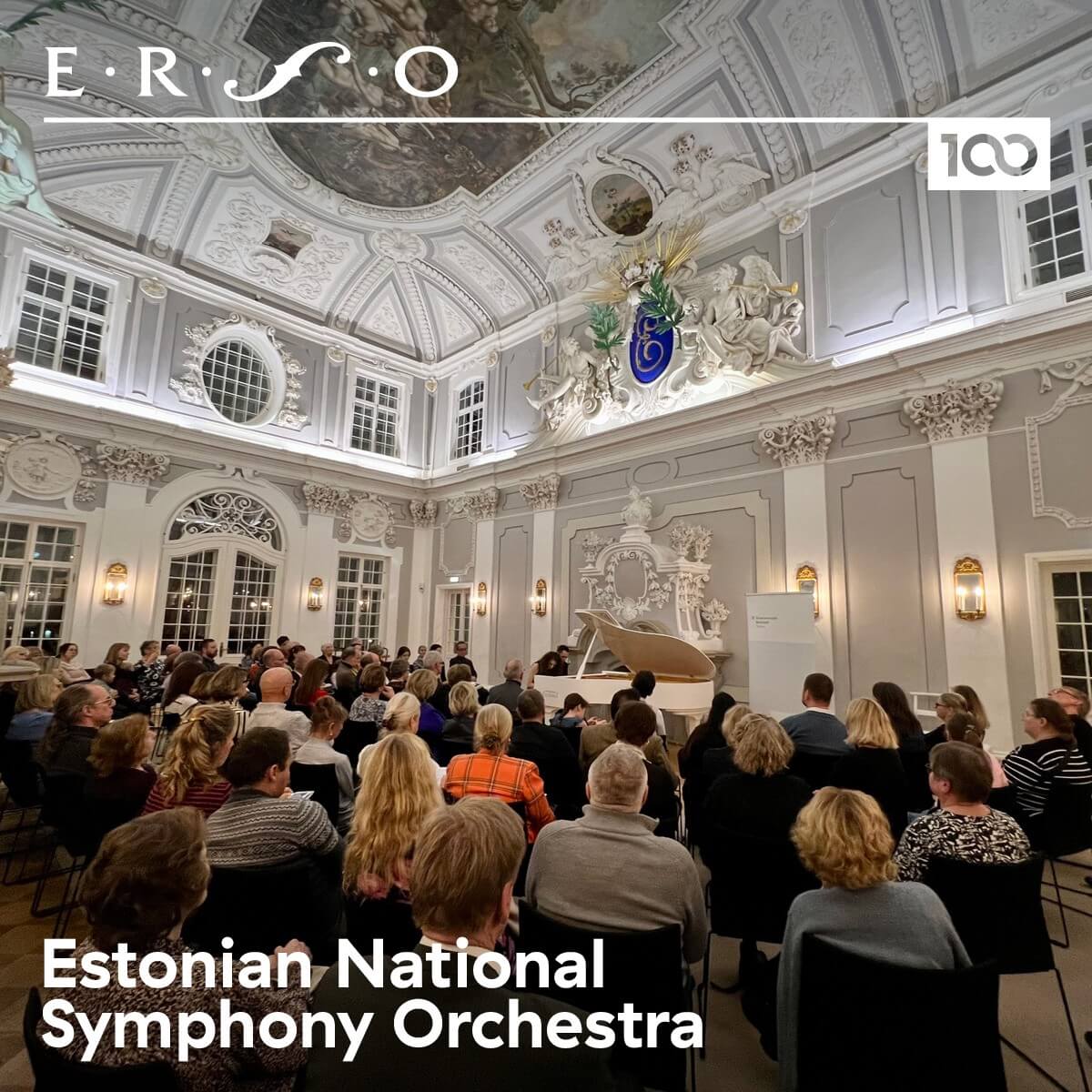
Kadriorg Palace is one the most well known and beautiful historic concert halls in Estonia offering memorable music experiences already for many decades. The tradition of performing music in the baroque palace goes back to 18th century when court music accompanied the daily life. The palace has had the pleasure to welcome many international artists and ensembles for outstanding performances.
The construction of the Kadriorg Palace was started by the Tsar Peter the Great of Russia in 1718. It was named Catharinenthal (in Estonian Kadriorg) in honour of his wife Catherine I. The palace was designed by the Italian architect Nicola Michetti and its abundantly decorated main hall is one of the most exquisite examples of baroque architecture both in Estonia and in northern Europe.
Kadriorg Palace has always been the crown jewel of Tallinn. The small festive tsars’ palace in the style of Roman Baroque, surrounded by a regular garden, with fountains, hedges and flowerbeds, planned after the model of Versailles.
The palace was a summer residence of Russian emperors untill 1917. In the 1920s, and again in 1946-1991 palace served as the main building of the Art Museum of Estonia. In the 1930s, it was the residence of the Head of State of the Estonian Republic. In 2000, it was opened as the Kadriorg Art Museum, which displays the largest collection of old Russian and Western European art in Estonia.
The artistic director of the Palace Music Concert Series is Aare Tammesalu.
In cooperation of the Art Museum of Estonia.
Tickets are on sale at the Kadriorg Art Museum and Piletikeskus outlets.
Supporters: Estonian Ministry of Culture, The Cultural Endowment of Estonia, Estonian Public Broadcasting, Tallinn Culture and Sports Department, UNESCO City of Music Tallinn, Kultuurikõla, Pointprint
Special thanks: Visit Tallinn, Õhtuleht
Schedule