All The Unspoken Words • Lossimuusika
Sunday, March 22, 2026 at 6 p.m.
Kadriorg Palace / Kadriorg Art Museum
PALACE MUSIC
ALL THE UNSPOKEN WORDS
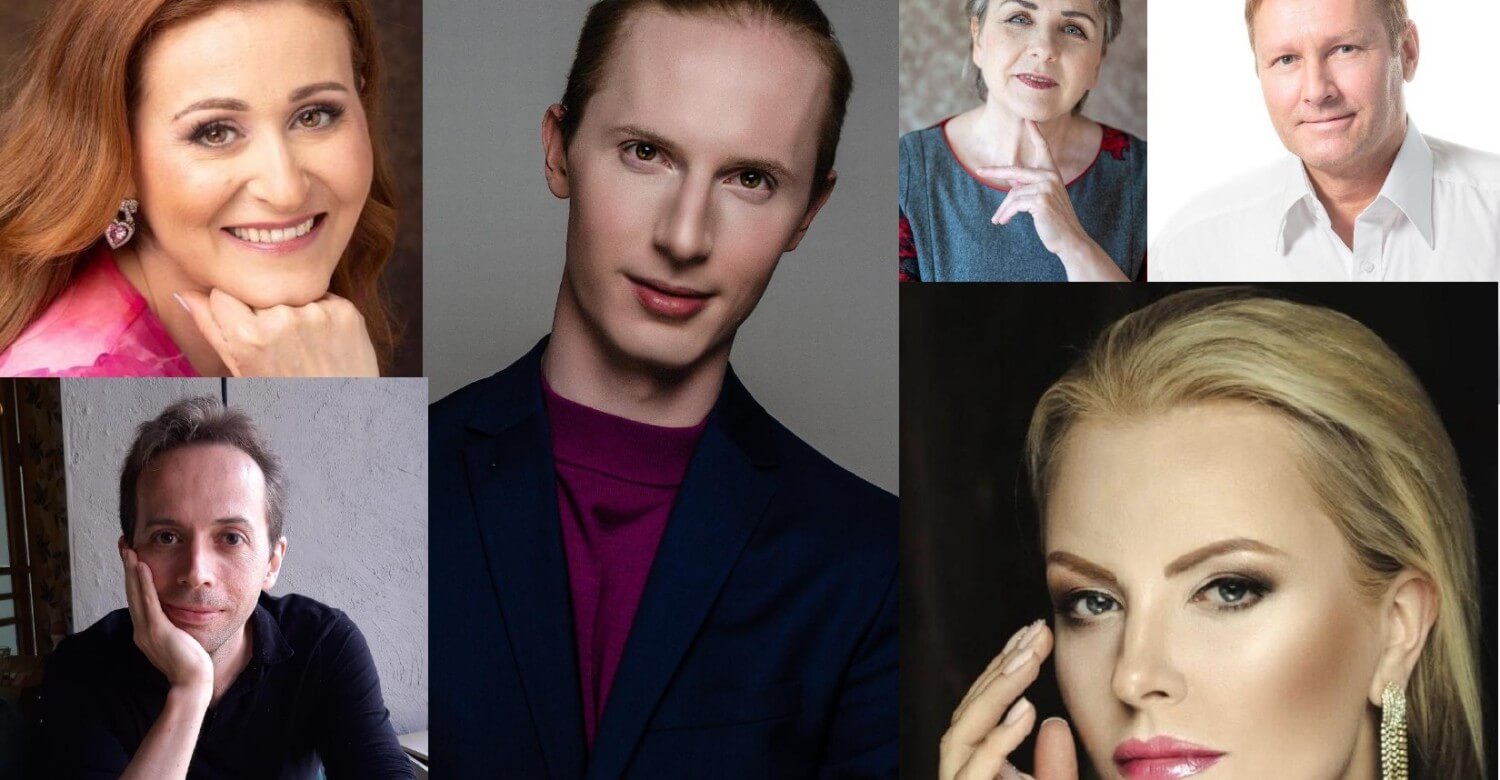
Marion Melnik – soprano
Maria Veretenina – coloratura soprano
Aare Saal – baritone
Rafael Dicenta – tenor
Kristjan-Jaanek Mölder – baritone
Tiina Kärblane – piano
Poetic Concert Featuring Vocal Music.
A diverse selection of emotionally resonant songs, arias and ensembles, unified by the theme of love. Pianist Tiina Kärblane masterfully integrates poetry and music into a cohesive and evocative evening.
Program:
Francesco Paolo Tosti (1846-1916)
„Ideale“ text: C. Errico
„A´vucchella“ text: G. D´Annunzio
Jean Sibelius (1865-1957)
„Svarta rosor“ Op. 36 No. 1, text: E. Josephson
„Säv säv susa“ Op. 36 No. 4, text: G. Fröding
„Var det en dröm“ Op. 37 No. 4, text: J. Vecksell
Artur Kapp (1878-1952)
"Metsateel" text: K. E. Sööt
Robert Schumann (1810-1856)
„Ein Jüngling liebt ein Mädchen“
„Aus alten Märchen“
from "Dichterliebe" Op. 4, text: H. Heine
Johannes Brahms (1833-1897)
„Von ewiger Liebe“ Op. 43 No. 1, text: J. Wenzig
Sergei Rahmaninov (1873-1843)
„Не пой, красавица“ Op. 4 No. 4, text: A. Puškin
„Здесь хорошо“ Op. 21 Nr. 7, text: G. Galinaja
Joaquin Turina (1882-1949)
„Cantares“ from „Poema en forma demcanciones“ Op. 19 No. 3, text A.Machado
Agustin Lara (1897-1970)
„Granada“, Fantasia Espanola, text: D. Dodd
Gaetano Donizetti (1797-1848)
Alfonso`s aria “Vien, Leonora!” from La Favorita
Adina ja Nemorino scene and duet "Trallarallara" from L´elisir d´amore
Giacomo Puccini (1858-1924)
Liu`s aria “Signore, ascolta!” from Turandot
Rodolfo`s and Marcello´s duet „O Mimi, tu piu non torni” from La Boheme
Giuseppe Verdi (1813-1901)
Violetta`s aria „E strano … Sempre libera“ ooperist La Traviata
Brindisi "Libiamo!" from La Traviata
Soprano Marion Melnik graduated with a Master’s degree in Music from the Opera Vocal Program of the Sibelius Academy in 2008, studying under Marjut Hannula. She has a wide-ranging repertoire that includes sacred music, lieder, musicals, opera, classical crossover, and even pop music.
Marion Melnik has performed as a soloist with numerous orchestras, including the Finnish Radio Symphony Orchestra (RSO), Tampere Philharmonic Orchestra, Estonian National Symphony Orchestra (ERSO), Kuopio City Orchestra, and Mikkeli City Orchestra. Her operatic roles include Oscar in Verdi’s Un Ballo in Maschera, Maria in West Side Story, Monica in The Medium, Laetitia in The Old Maid and the Thief, Musetta in La Bohème, Despina in Così fan tutte, Papagena in The Magic Flute, and the High Priestess in Aida. She has appeared at the Finnish National Opera and the Savonlinna Opera Festival.
Marion Melnik made her debut at the Estonian National Opera in 2008 as Oscar in Un Ballo in Maschera and was engaged there as a guest soloist from 2008 to 2011. In recent years, Melnik has been active in concert performances and independent opera productions. Since 2018, Marion has been living in Estonia, where she performs regularly and teaches singing actively.
Tiina Kärblane is a graduate of the Tallinn Music High School and completed her studies at the Tallinn State Conservatory in the piano class of Professor Bruno Lukk.
In 1985, she began working at the Tallinn State Conservatory in the Department of String Instruments as a répétiteur (accompanist). This work brought her together with her future (now long-time former) husband Jüri Gerretz, with whom she travelled extensively throughout the Soviet Union while working for Gosconcert between 1986 and 1989, and with whom she made music together for many years.
In 1991, she moved to Finland—initially to Kuopio and later to Tampere—where, in addition to her position as a lecturer at a Tampere University of Applied Sciences, she had the opportunity to work as a pianist at the Tampere Opera. This wonderful period brought her into contact with many Finnish and several European opera stars.
By 2013, Finland had become a closed chapter for her, and homesickness brought Tiina back to Estonia. She initially worked at the Estonian Academy of Music and Theatre, and later as a répétiteur for the choir of the Estonian National Opera. She also began collaborating with the Pille Lill Music Fund.
The soloists of today’s concert represent precisely those individuals who have remained close to her from that period of life.
Alongside music, therapeutic work has now come to the forefront of Tiina's life these days: performance coaching, holistic regression therapy, and energy medicin.
Rafael Dicenta was born in Madrid. He studied in the conservatories of Madrid and Córdoba. He developed his vocal technique with Amable Díaz, Valle Duque and especially with the Maestro Don Carlos Hacar. Since August of 2020, he is a member of the Estonian National Opera Chorus. He has also performed as a soloist for the Estonian National Opera roles like Armoured man and Priest (Mozart’s The Magic Flute), Yamadori (Puccini’s Madame Butterfly), Arithmetics (Ravel’s The Child and the Spells), Don Curzio (Mozart’s Le nozze di Figaro), Harlequin (Ullmann’s Der Keiser von Atlantis), Alfred (Strauss’ Die Fledermaus), Gonzalve (Ravel’s L’heure Espagnole) and the Tenor part in Stravinsky’s ballet Pulcinella and Orff’s Cantata Carmina Burana. In this season he will perform also Schoolmaster (Janáček´s The Little Cunning Vixen) among others. He has also sung in Tallinn the tenor part in Saint-Saëns’ Oratorio de Noël, in Ottorino Respighi’s Lauda per la Natività del Signore and in Juhan Jürme’s Cantata Memento Mori.
Maria Veretenina began her professional music education at the Georg Ots Music School and continued her studies at the Estonian Academy of Music and Theatre with Prof Jaakko Ryhanen, and graduated from Master’s programme in 2010. In 2009-2010, she studied at the National Academy of St Cecilia, Rome with Prof Rebecca Berg.
Maria has won several awards, including first prize at Baltic International Competition of Folk and Academic Song for for Young Singers 2009, third prize at the Sixth Claudia Taev International Competition of Opera Singers 2009, second prize at the Seventh International Isabella Yurieva Competition of Russian Romance 2006. In 2007, she appeared as a soloist in Handel’s oratorio “Saul” staged in Sweden.
Her repertoire includes the roles of Cleopatra (Händel Julius Caesar), Zerlina (Mozart Don Giovanni), Liu (Puccini Turandot), Lauretta (Puccini Gianni Schicchi), Musetta (Puccini La Bohéme), Violetta (Verdi La Traviata), Marfa (Rimsky-Korsakov Tsar’s Bride), Xenia (Mussorgsky Boris Godunov), Tatiana (Tchaikovsky Eugene Onegin).
She has sung in Sweden, Finland, Russia, Italy, Austria, Hungary, Germany and Great Britain. In 2011, Maria makes her debut as an invited soloist at Finnish National Opera in Helsinki.
Aare Saal is a cornerstone of Estonian baritones, having graduated from the Estonian Academy of Music and Theatre with a specialization in opera singing (under Ivo Kuusk, Virgilijus Noreika, and Jaakko Ryhänen) and furthering his studies in masterclasses with Gino Bechi and Rolando Panerai in Italy. Saal won first place at the international competition “Rossini and Donizetti Voices” (1996, Italy) and is a laureate of the Georg Ots Prize (1997).
In 1989, he made his debut at the Estonian National Opera in the lead role of Mozart’s The Marriage of Figaro. He has performed in over 40 opera and operetta roles in productions at both the Estonian National Opera and Vanemuine Theatre, as well as at the Latvian National Opera, Lithuanian National Opera and Ballet Theatre, Teatro Comunale di Firenze, Stockholm’s Dramatiska Ensemble, and Malmö Opera and Music Theatre.
His most notable roles include the title roles in Verdi’s Nabucco, Mozart’s Don Giovanni, and Tchaikovsky’s Eugene Onegin, as well as Rigoletto in Verdi’s Rigoletto. Other key roles include Figaro (Rossini’s The Barber of Seville), Escamillo (Bizet’s Carmen), Belcore (Donizetti’s L’elisir d’amore), and several roles in Verdi’s operas such as Don Carlo (Ernani), Rodrigo (Don Carlo), Renato (Un ballo in maschera), and Amonasro (Aida). Additionally, he has portrayed Yeletsky (Tchaikovsky’s The Queen of Spades), Valentin (Gounod’s Faust), Count Almaviva (Mozart’s The Marriage of Figaro), Dandini (Rossini’s La Cenerentola), Marcello (Puccini’s La Bohème), Edwin (Kálmán’s Die Csárdásfürstin), Achilles (Handel’s Julius Caesar), as well as the Third Guest and U.S. Soldier (Tüür’s Wallenberg), Severo (Donizetti’s Poliuto), and many others.
Saal’s repertoire encompasses a broad selection of solo programs, including Estonian, Russian, and Italian music. In addition, he has worked as a vocal pedagogue at the Tallinn Music and Ballet School and has been an instructor at the Rapla International Summer Academy for Singers. Aare Saal is also a recipient of the Music Trust PLMF scholarship.
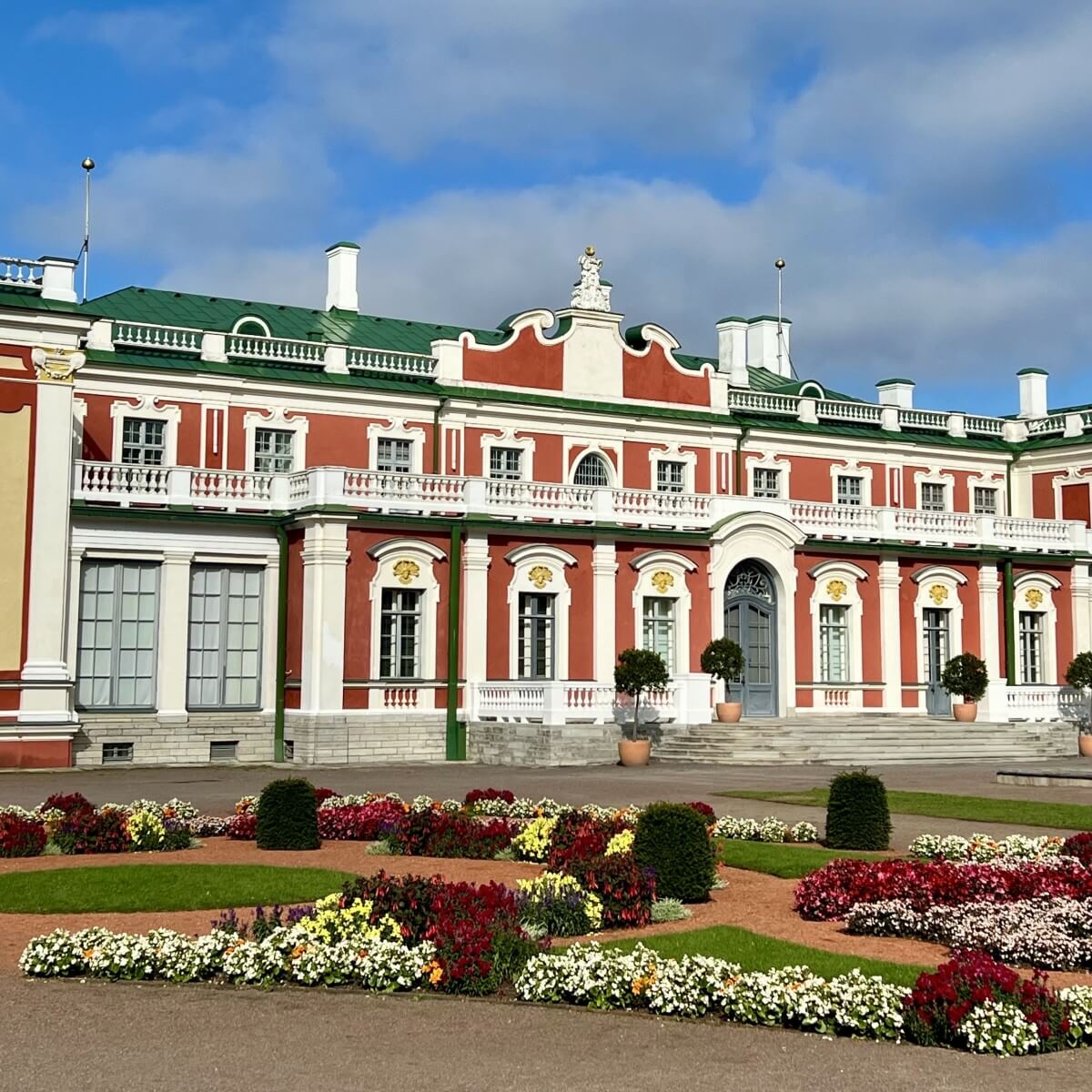
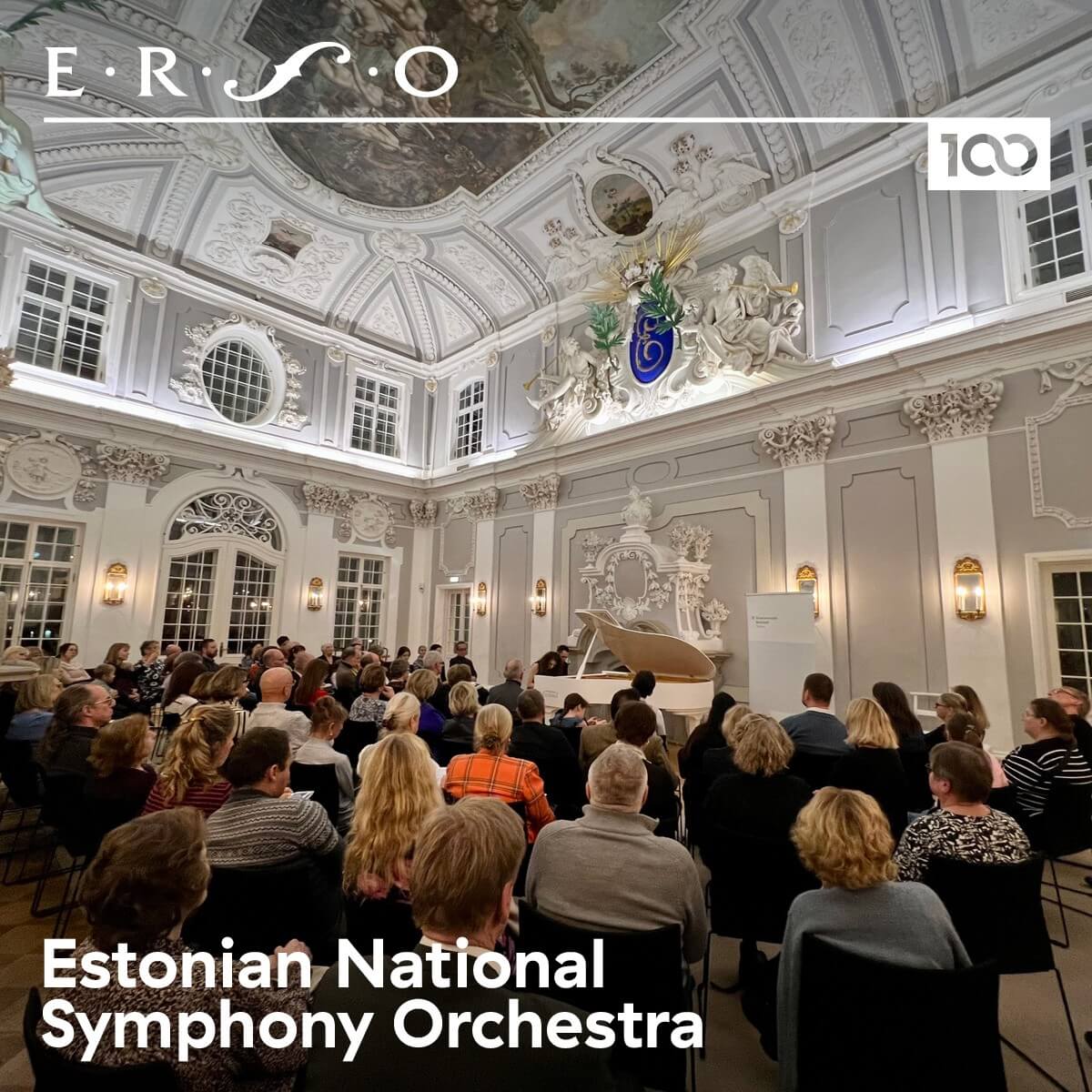
Kadriorg Palace is one the most well known and beautiful historic concert halls in Estonia offering memorable music experiences already for many decades. The tradition of performing music in the baroque palace goes back to 18th century when court music accompanied the daily life. The palace has had the pleasure to welcome many international artists and ensembles for outstanding performances.
The construction of the Kadriorg Palace was started by the Tsar Peter the Great of Russia in 1718. It was named Catharinenthal (in Estonian Kadriorg) in honour of his wife Catherine I. The palace was designed by the Italian architect Nicola Michetti and its abundantly decorated main hall is one of the most exquisite examples of baroque architecture both in Estonia and in northern Europe.
Kadriorg Palace has always been the crown jewel of Tallinn. The small festive tsars’ palace in the style of Roman Baroque, surrounded by a regular garden, with fountains, hedges and flowerbeds, planned after the model of Versailles.
The palace was a summer residence of Russian emperors untill 1917. In the 1920s, and again in 1946-1991 palace served as the main building of the Art Museum of Estonia. In the 1930s, it was the residence of the Head of State of the Estonian Republic. In 2000, it was opened as the Kadriorg Art Museum, which displays the largest collection of old Russian and Western European art in Estonia.
Music has been performed in the palace halls since the 18th century. In the past few decades, the most brilliant Estonian and international musicians have delighted listeners in the palace. Regular concerts started to take place in the Kadriorg Palace again in 2014, when the museum launched the Palace Music Concert Series. The extraordinary acoustics and the magnificent interior of the main hall make every concert a truly enjoyable artistic experience.
The artistic director of the Palace Music Concert Series is Aare Tammesalu.
In cooperation of the Art Museum of Estonia.
Tickets are on sale at the Kadriorg Art Museum and Piletikeskus outlets.
Supporters: Estonian Ministry of Culture, The Cultural Endowment of Estonia, Estonian Public Broadcasting, Tallinn Culture and Sports Department, UNESCO City of Music Tallinn, Kultuurikõla, Pointprint
Special thanks: Visit Estonia, Visit Tallinn, Õhtuleht
Concert tickets are not refundable, but if necessary, we can exchange them for passes to other Palace Music concerts
Event timeline/line-up

Related