
Cantores Vagantes • Lossimuusika
Sunday, May 3, 2026 at 6 p.m.
Kadriorg Palave / Kadriorg Art Museum, Tallinn
PALACE MUSIC SEASON FINALE CONCERT
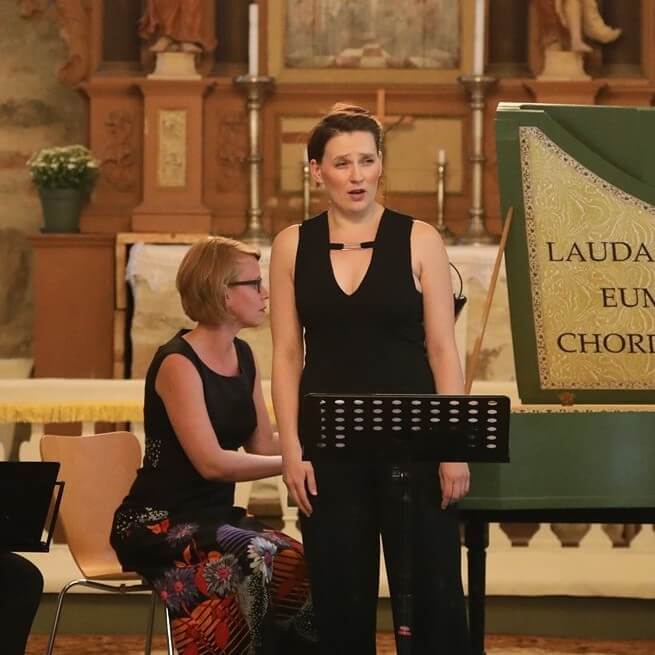
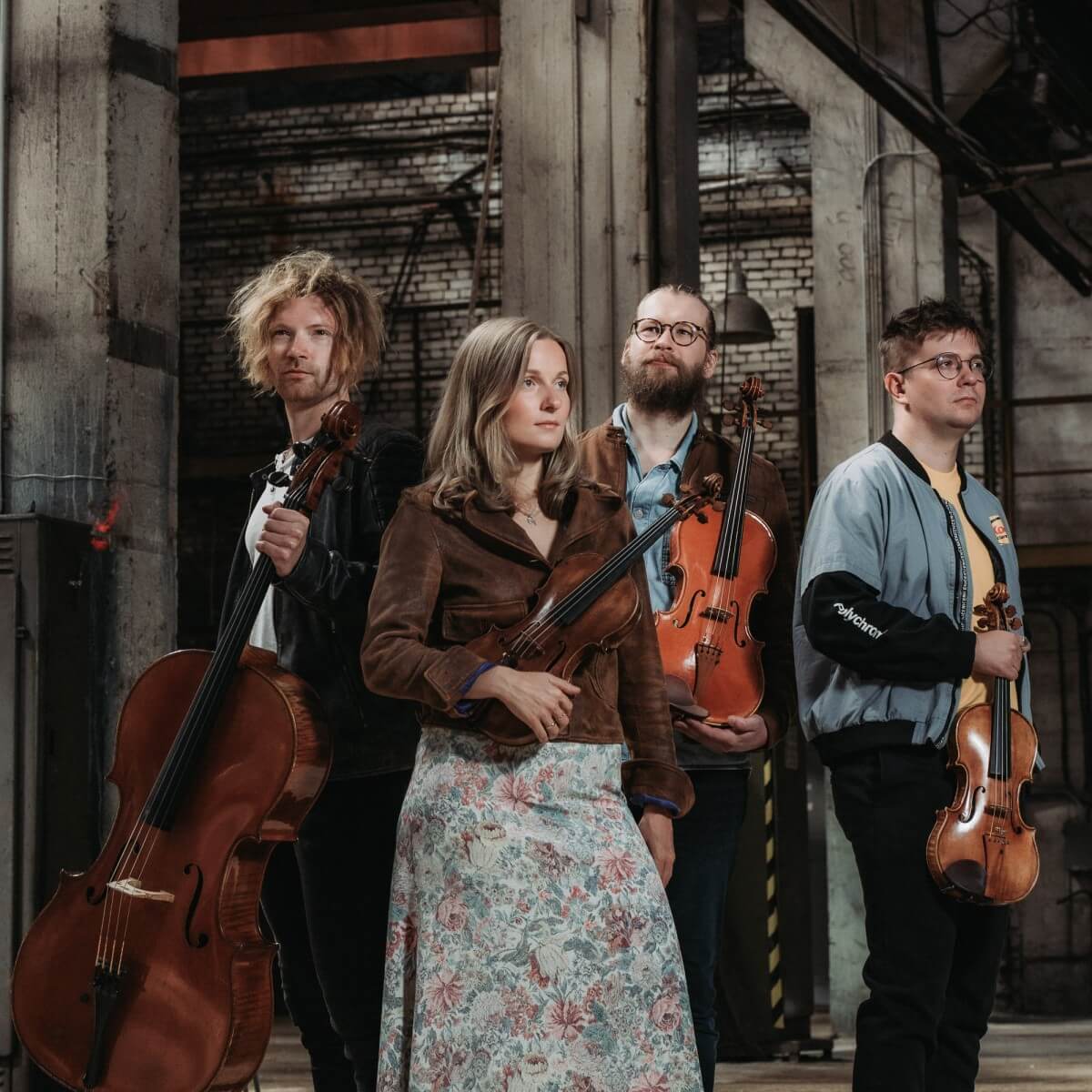
Early Music Group Cantores Vagantes
Program:
Johann Christian Bach (1735-1782)
Flute Quartet No. 5 in A mahor, W.B 59 (1760-1770?)
Allegro - Rondo Grazioso
Carl Friedrich Abel (1723-1787)
Flute Quartet No. 4 in D major, WK 226 (1770?)
Allegro non troppo - Un poco vivace
Johann Babptist Wendling (1723-1797)
Concertino No. 3 in D major, GUN 23 /Trois quatuors Concertants pour Flute, Violon, Viole et Basse/ (1760-1770?)
Allegro moderato - Larghetto - Allemand. Presto
Wolfgang Amadeus Mozart (1756-1791)
Flute Quartet No. 3 in C major, K.Anh. 171/285b (1778)
Allegro - Andantino con variazioni
In cooperation with Cantores Vagantes
Flute Quartets from Bach to Mozart
The flute quartet stands as one of the most exquisite forms of 18th-century chamber music—a genre where elegance and sensitivity intertwine in a transparent sonic fabric. Though this ensemble has not been forgotten by contemporary composers, the works most widely celebrated are undoubtedly Wolfgang Amadeus Mozart's flute quartets, composed toward the end of the 1770s. These are exceptional masterpieces that highlight both the flute's lyrical voice and the balanced dialogue with the strings.
Of course, flute quartets have their own prehistory, with roots in the galant era that polished this form to perfection. Carl Friedrich Abel, Johann Christian Bach, and Johann Baptist Wendling all sought in their compositions a balance between virtuosity, expressiveness, and simplicity. Abel was one of the last great viola da gamba virtuosos and a central figure in London's musical life; Johann Christian Bach—often called the "London Bach"—was a key shaper of the galant style and an influence on the young Mozart. Wendling, a distinguished flutist active in Mannheim who played in the famed Mannheim Orchestra and was renowned for his extraordinarily beautiful tone, inspired numerous composers to write for the flute.
These composers did not work in isolation but were part of a tightly woven European musical network. Johann Christian Bach and Carl Friedrich Abel were colleagues in London, jointly organizing the famous Bach–Abel concerts that featured new chamber and orchestral music. Young Wolfgang Amadeus Mozart's time in London brought him into their orbit—there he met Johann Christian Bach, whose style left a profound mark on Mozart's early oeuvre. Wendling, like Mozart, moved in the circles of the Mannheim court, where an orchestral culture took shape that profoundly influenced Europe's musical language.
Their creations hail from an era when European musical culture shifted from courtly splendor toward a more intimate mode of expression—music not meant to overwhelm, but to touch our most delicate sensibilities.
Cantores Vagantes opens the door for listeners to this nearly unknown yet enchanting time, when classifying the flute among the woodwinds was not merely logical, but inevitable.
Cantores Vagantes is an Estonian early music ensemble specializing in historical performance practices. Founded as Varajase Muusika Stuudio Cantores Vagantes in 1989, it functions as a non-profit (MTÜ) dedicated to uniting performers of early music, providing training, and promoting authentic interpretations on period instruments.
The artistic directors are Reet Sukk and Taavi-Mats Utt, both experienced musicians who have collaborated for over 20 years. The ensemble's lineup varies by repertoire, including recorder players like those in their sub-group Gamut Consort (formed 2011, renamed 2016), and has released two CDs.
They organize concerts, workshops, and the annual early music festival "Tallinn feat. Reval" since 2018, held across Estonia (e.g., Tallinn, Narva, Otepää). Recent events include Purcell and Blow programs in 2025–2026, supporting young musicians and international guests.
Kadriorg Palace is one the most well known and beautiful historic concert halls in Estonia offering memorable music experiences already for many decades. The tradition of performing music in the baroque palace goes back to 18th century when court music accompanied the daily life. The palace has had the pleasure to welcome many international artists and ensembles for outstanding performances.
The construction of the Kadriorg Palace was started by the Tsar Peter the Great of Russia in 1718. It was named Catharinenthal (in Estonian Kadriorg) in honour of his wife Catherine I. The palace was designed by the Italian architect Nicola Michetti and its abundantly decorated main hall is one of the most exquisite examples of baroque architecture both in Estonia and in northern Europe.
Kadriorg Palace has always been the crown jewel of Tallinn. The small festive tsars’ palace in the style of Roman Baroque, surrounded by a regular garden, with fountains, hedges and flowerbeds, planned after the model of Versailles.
The palace was a summer residence of Russian emperors untill 1917. In the 1920s, and again in 1946-1991 palace served as the main building of the Art Museum of Estonia. In the 1930s, it was the residence of the Head of State of the Estonian Republic. In 2000, it was opened as the Kadriorg Art Museum, which displays the largest collection of old Russian and Western European art in Estonia.
Music has been performed in the palace halls since the 18th century. In the past few decades, the most brilliant Estonian and international musicians have delighted listeners in the palace. Regular concerts started to take place in the Kadriorg Palace again in 2014, when the museum launched the Palace Music Concert Series. The extraordinary acoustics and the magnificent interior of the main hall make every concert a truly enjoyable artistic experience.
The artistic director of the Palace Music Concert Series is Aare Tammesalu.
In cooperation of the Art Museum of Estonia.
Tickets are on sale at the Kadriorg Art Museum and Piletikeskus outlets.
Supporters: Estonian Ministry of Culture, The Cultural Endowment of Estonia, Estonian Public Broadcasting, Tallinn Culture and Sports Department, UNESCO City of Music Tallinn, Kultuurikõla, Pointprint
Special thanks: Visit Estonia, Visit Tallinn, Õhtuleht
Concert tickets are not refundable, but if necessary, we can exchange them for passes to other Palace Music concerts
Event timeline/line-up