Concerto Budapest Winds • Lossimuusika
Sunday, February 1, 2026 at 6 p.m.
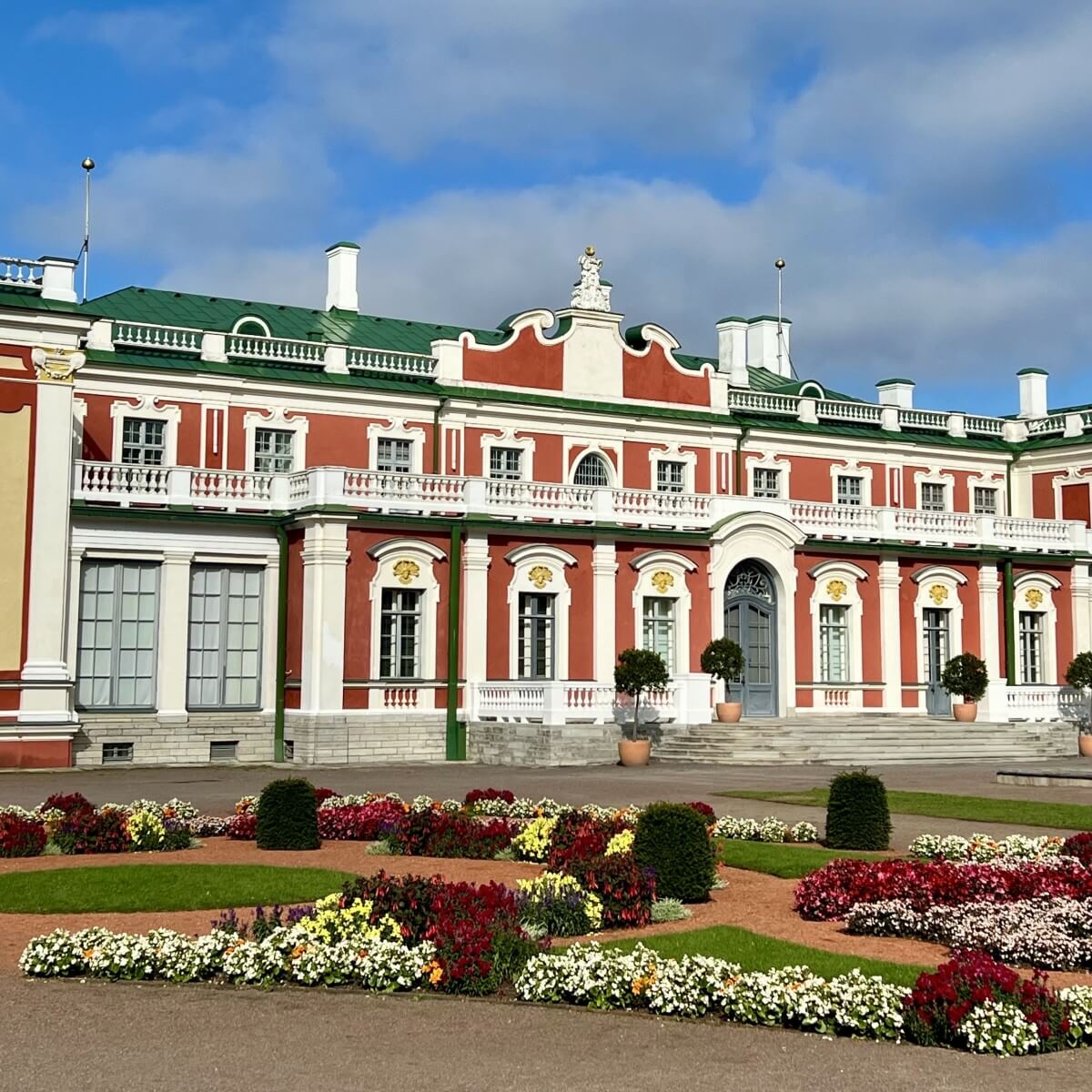
Kadriorg Palace / Kadriorg Art Museum
PALACE MUSIC
CONCERTO BUDAPEST WINDS
Orsolya Kaczander - flute
Csaba Klenyán - clarinet
György Puha - clarinet
Béla Horváth - oboe
Bálint Mohai - bassoon
Albert Nagy - bassoon
János Benyus - French horn
Program:
Wolfgang Amadeus Mozart 12 Variations on a French Nursery Song, K. 265 (arrangement by Gábor Werner)
György Kurtág Wind Quintet
György Kurtág Signs, Games and Messages
Ludwig van Beethoven Duo in C major, Op. 21
György Kurtág Scenes for Flute, Op. 39
György Ligeti Six Bagatelles
In cooperation with Liszt Institute - Tallinn Hungarian Cultural Centre
Concerto Budapest Symphony Orchestra is one of Hungary’s leading orchestras, with its rich history and dynamism of its young musicians. It is one of the most progressive and versatile symphonic orchestras, whose playing is characterized by the passion, energy, and commitment that its musicians give to their performances of repertoire ranging from well-loved masterpieces to newly composed works of the twenty-first century. Through its ambitious and innovative programs and special sound, it has brought a new colour to Hungary’s musical palette.
This programme brings together cornerstones of the classical repertoire and emblematic works of the Hungarian avant‑garde, creating a dialogue between clarity, playfulness and bold modern expression. Mozart’s Twelve Variations on a French Nursery Song, heard here in Gábor Werner’s arrangement, opens the concert with wit, elegance and effortless invention.
György Kurtág’s music appears in three contrasting facets: the early Wind Quintet, the aphoristic miniatures of Signs, Games and Messages, and the intimate, finely etched Scenes for Flute, Op. 39. Each piece reveals Kurtág’s unmistakable voice — concise, expressive and deeply human.
Beethoven’s Duo in C major, Op. 21 offers a bright, classical counterbalance, full of charm and transparent craftsmanship. The programme concludes with György Ligeti’s Six Bagatelles, a vibrant and rhythmically charged suite that distils the composer’s early style into brilliant, energetic miniatures.
Together, these works trace a path from classical elegance to the concentrated intensity of the 20th century, highlighting the richness and diversity of Central European musical imagination.
Concerto Budapest's musical director András Keller has said about the "Concerto Budapest Mozart Planet" concert series arriving in Tallinn on February 1, 2026, that it is not just a musical event, but a way to build bridges through culture. As part of the series, chamber concerts are given for music lovers across Hungary. The concerts, organized under the auspices of the Petőfi Cultural Programme, take place in fifty rural towns and villages, often in communities where there is rarely an opportunity to hear classical music performed live.
Keller believes that music can create communities, strengthen identity, and the shared experiences it provides enrich everyday life. Concerto Budapest is delighted that the Liszt Institutes invited them on an international tour, where they will perform Hungarian music and introduce Hungarian musical culture in eight locations from Helsinki to Sofia. This brings them to Tallinn on February 1.
In Keller's view, the growing unrest in the world creates an ever greater need for goodness and security. Mozart's music offers endless nourishment for love, expressing all human emotions and character traits in the simplest and most wondrous way through its sounds. His music touches everyone, radiates joy of life, and makes people happy.
At the "Planet Mozart" concerts, life emerges from this pure music, and if concertgoers can experience it even for just an hour, the world can become a slightly better place for them. In Tallinn, the "Planet Mozart" series will mainly feature music by Hungarian composers, including works by György Kurtág, who celebrates his 100th birthday on February 19, 2026.
György Kurtág was born at Lugos (Lugoj in Romania) on 19 February 1926. From 1940 he took piano lessons from Magda Kardos and studied composition with Max Eisikovits in Timisoara. Moving to Budapest, he enrolled at the Academy of Music in 1946 where his teachers included Sándor Veress and Ferenc Farkas (composition), Pál Kadosa (piano) and Leó Weiner (chamber music).
In 1957-58 Kurtág studied in Paris with Marianne Stein and attended the courses of Messiaen and Milhaud. As a result, he rethought his ideas on composition and marked the first work he wrote after his return to Budapest, a string quartet, as his opus 1.
In 1958-63 Kurtág worked as a répétiteur with the Béla Bartók Music Secondary School in Budapest. In 1960-80 he was répétiteur with soloists of the National Philhamonia. From 1967 he was assistant to Pál Kadosa at the Academy of Music, and the following year he was appointed professor of chamber music. He held this post until his retirement in 1986 and subsequently continued to teach at the Academy until 1993.
With increased freedom of movement in the 1990s he has worked increasingly outside Hungary, as composer in residence with the Berlin Philharmonic (1993-1994), with the Vienna Konzerthaus (1995), in the Netherlands (1996-98), in Berlin again (1998-99), and a Paris residency at the invitation of the Ensemble Intercontemporain, Cité de la Musique and the Festival d’Automne.
Kurtág won the prestigious 2006 Grawemeyer Award for Music Composition for his '...concertante...'. His opera Fin de Partie, based on Samuel Beckett's play, was premiered by La Scala Milan in 2018 and was acclaimed as his magnum opus.
Born on 28 May 1923 in Dicsöszenmárton (Transylvania), György Ligeti attended secondary school in Cluj, where he also studied composition at the conservatory with Ferenc Farkas from 1941-1943. During the Second World War he was sent to a forced labor brigade under the Horthy regime (most of the rest of his family was deported and murdered in concentration camps). After the war, from 1945 to 1949, he returned to his composition studies, working with Sándor Veress and Ferenc Farkas at the Franz Liszt Academy in Budapest, where he also taught harmony and counterpoint between 1950 and 1956. After the suppression of the Hungarian revolution by the Soviet army in 1956, Ligeti fled to Vienna and then moved to Cologne, where he met composers such as Karlheinz Stockhausen. In Cologne, he worked at the Westdeuscher Rundfunk electronic music studio (1957-1959), getting to know other composers such as Pierre Boulez, Luciano Berio, and Mauricio Kagel. In 1959, he settled in Vienna, and was granted Austrian citizenship in 1967.
During the 1960s, Ligeti participated each year in the Darmstadt Summer Courses (1959-1972) and taught in Stockholm as a visiting professor (1961-1971). He was awarded a fellowship by the DAAD in Berlin for the year 1969-1970, and was a composer-in-residence at Stanford University in 1972. From 1973 to 1989, he taught composition at the Hochschule für Musik in Hamburg. Most of his life thereafter was spent in Vienna and Hambourg. Ligeti was awarded many distinctions over his career, including the Berliner Kunstpreis, the Bach Prize of the Free and Hanseatic City of Hamburg, and the Composition Prize of the Fondation Prince Pierre de Monaco.
During his early years in Hungary, Ligeti's compositions mostly show the influence of Bartók and Kodály. One hears a new style emerging in the orchestral works Apparitions (1958-1959) and Atmosphères (1961), characterized by dense polyphony (or micro-polyphony), and static formal development. Major works from this time include Requiem (1963-1965), Lux aeterna (1966), Continuum (1968), String quartet n°2 (1968), and his Kammerkonzert (1969-1970).
Over the course of the 1970s, his polyphonic writing became more melodic and transparent, as can be heard in Melodien (1971) as well as in his opera Le Grand Macabre (1974-1977/1996). Many works from this time also display an emerging desire to escape equal temperament, as in Ramifications (1968-1969).
During the 1980s, Ligeti developed a compositional technique that featured complex polyrhythms, influenced both by 14th century polyphonic music and by various ethnic music traditions: Trio pour violon, horn, and piano (1982), Etudes pour piano (1985-1995), Concerto pour piano (1985-1988), Concerto pour violon (1990-1992), Nonsense Madrigals (1988-1993), and the Sonate pour alto solo (1991-1994).
In 1997, Ligeti composed a second version of Grand Macabre, which premiered in Salzburg in July 1997. After a concerto for horn and ensemble, Hamburg Concerto, and a last cycle of songs Síppal, dobbal, nádihegedüvel for mezzo-soprano and percussion ensemble (2000), Book 3 of Piano Études, in 2001, was the last work he composed.
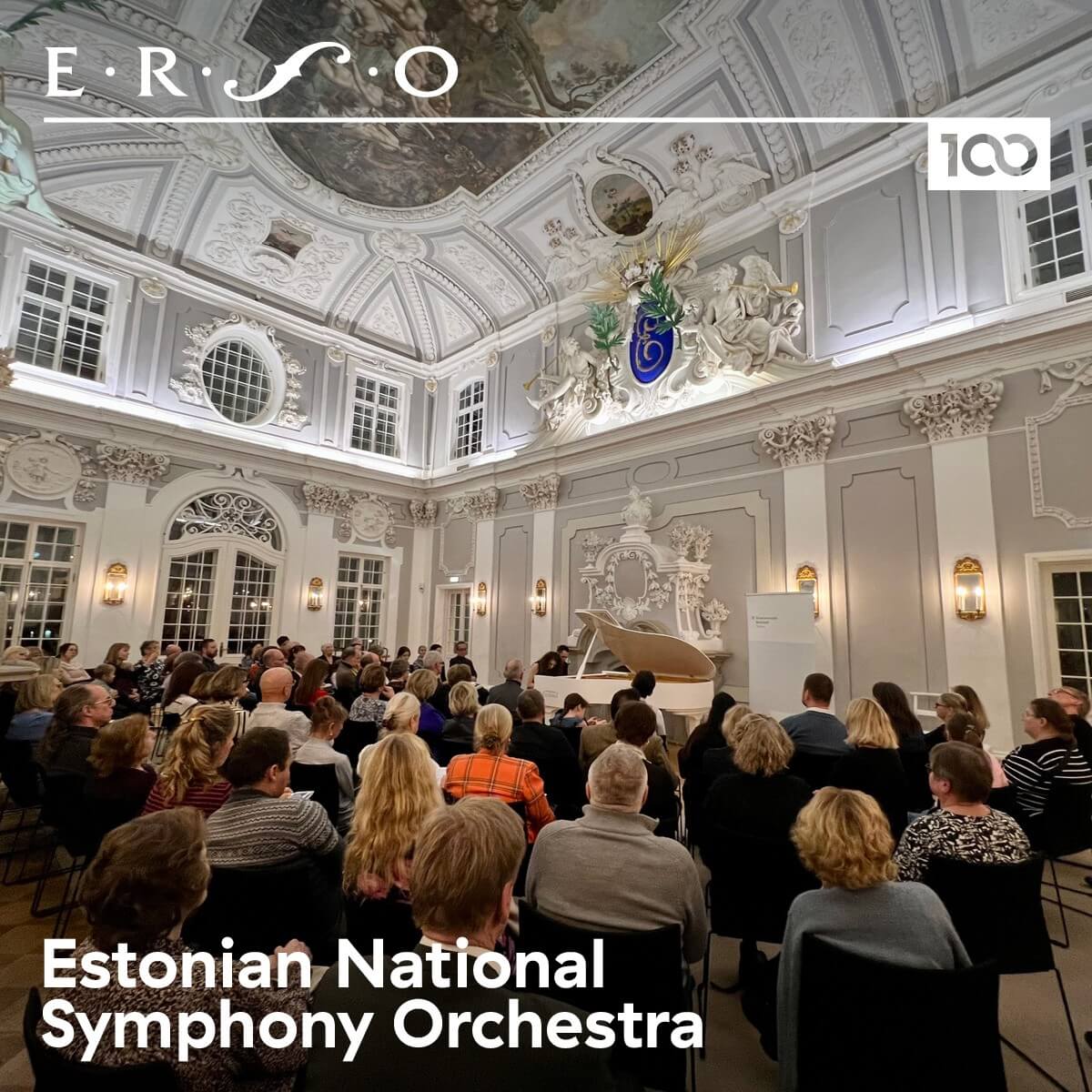
Kadriorg Palace is one the most well known and beautiful historic concert halls in Estonia offering memorable music experiences already for many decades. The tradition of performing music in the baroque palace goes back to 18th century when court music accompanied the daily life. The palace has had the pleasure to welcome many international artists and ensembles for outstanding performances.
The construction of the Kadriorg Palace was started by the Tsar Peter the Great of Russia in 1718. It was named Catharinenthal (in Estonian Kadriorg) in honour of his wife Catherine I. The palace was designed by the Italian architect Nicola Michetti and its abundantly decorated main hall is one of the most exquisite examples of baroque architecture both in Estonia and in northern Europe.
Kadriorg Palace has always been the crown jewel of Tallinn. The small festive tsars’ palace in the style of Roman Baroque, surrounded by a regular garden, with fountains, hedges and flowerbeds, planned after the model of Versailles.
The palace was a summer residence of Russian emperors untill 1917. In the 1920s, and again in 1946-1991 palace served as the main building of the Art Museum of Estonia. In the 1930s, it was the residence of the Head of State of the Estonian Republic. In 2000, it was opened as the Kadriorg Art Museum, which displays the largest collection of old Russian and Western European art in Estonia.
Music has been performed in the palace halls since the 18th century. In the past few decades, the most brilliant Estonian and international musicians have delighted listeners in the palace. Regular concerts started to take place in the Kadriorg Palace again in 2014, when the museum launched the Palace Music Concert Series. The extraordinary acoustics and the magnificent interior of the main hall make every concert a truly enjoyable artistic experience.
The artistic director of the Palace Music Concert Series is Aare Tammesalu.
In cooperation of the Art Museum of Estonia.
Tickets are on sale at the Kadriorg Art Museum and Piletikeskus outlets.
Supporters: Estonian Ministry of Culture, The Cultural Endowment of Estonia, Estonian Public Broadcasting, Tallinn Culture and Sports Department, UNESCO City of Music Tallinn, Kultuurikõla, Pointprint
Special thanks: Visit Estonia, Visit Tallinn, Õhtuleht
Concert tickets are not refundable, but if necessary, we can exchange them for passes to other Palace Music concerts
Event timeline/line-up

Related