XIV Tallinn Harpsichord Festival • Lossimuusika
Sunday, April 12, 2026 at 6 p.m.
Kadriorg Palace / Kadriorg Art Museum, Tallinn
PALACE MUSIC
XIV TALLINN HARPSICHORD FESTIVAL
FINAL CONCERT
Performers:
Kristiina Are, Saale Fischer, Reinut Tepp, Ene Nael, Julia Hess - harpsichord
Reet Sukk - recorder
Ingely Laiv–Järvi - baroque oboe
Melissa Jõesaar–Koel - baroque violin
Tõnu Jõesaar - baroque cello
Program:
Georg Philipp Telemann (1681-1767)
Concerto in D major TWV 42:D6
Piacevole
Largo
Vivace
Reinut Tepp - harpsichord
Reet Sukk - recorder
Louis Marchand (1669-1732)
Suite in D minor
Prelude
Allemande
Courante I & II
Chaconne
Saale Fischer - harpsichord
Liina Sumera (s. 1988)
"Tremors" (2026, premiere)
Ene Nael - harpsichord
Johann Sebastian Bach (1685-1750)
Ciaccona from Partita No. 2 for violin solo (arr. Gustav Leonhardt)
Julia Hess - harpsichord
Georg Friedrich Händel (1685–1759)
Trio Sonata in G mimor HWV 393
Andante
Allegro
Largo
Allegro
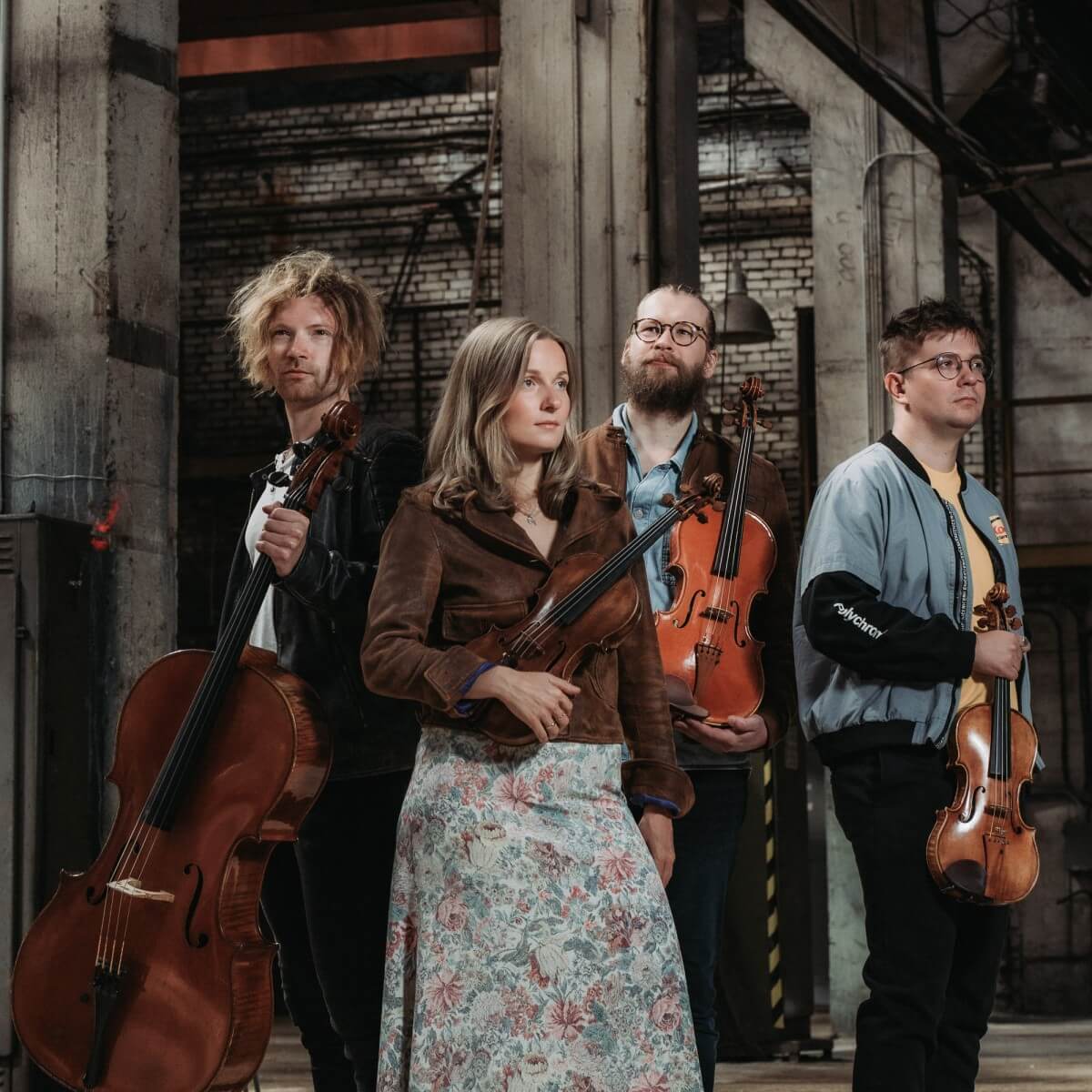
Ensemble LaBande
Ingely Laiv–Järvi - barque oboe, Melissa Jõesaar–Koel - baroque violin, Tõnu Jõesaar - baroque cello, Kristiina Are - harpsichord
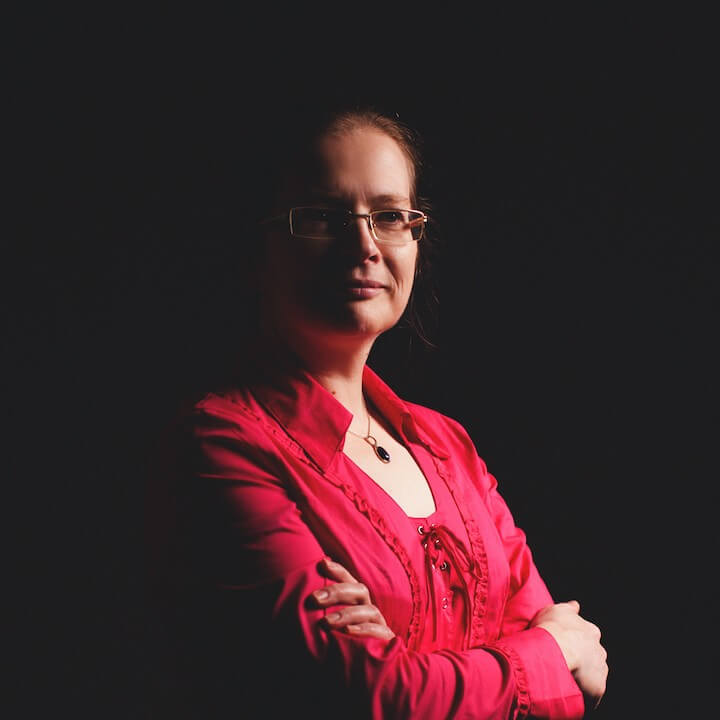
Saale Fischer (1979) is an Estonian harpsichordist, music educator, and author.
After graduating from Tallinn Techincal University (BA, 2005) she furthered her studies in Early Music and harpsichord at Tallinn Georg Ots Music School (teacher Reinut Tepp), Estonian Academy of Music and Theatre (BA in 2007, prof. Imbi Tarum), and at the Musikhochschule Trossingen in Germany (MA in 2010, prof. Marieke Spaans). She has taken part in several masterclasses for harpsichord and chamber music with Lars Ulrik Mortensen, Jaques Ogg, Miklós Spanyi, Blandine Verlet, and Ketil Haugsand, and obtained private tutoring in organ playing with Dr. Eberhard Schulz in Germany. In 2020, Saale obtained a Ph.D. degree from the Estonian Academy of Music and Theatre where she successfully defended her thesis „Tempo and Rhetorical Timing in Performance of the 17th and 18th Century Instrumental Music“.
In recent years, Saale’s creative output has been compiled of concert performances and organization, teaching, and writing. In 2014, she co-founded the Estonian baroque ensemble Floridante. Initially comprised of four members, Floridante today involves a few dozen Estonian musicians with a passion for Early Music. As a soloist and continuo-player of Floridante, Saale has been performing harpsichord, organ, and fortepiano in programs from nuove musiche, French baroque, Bach & Händel, Empfindsamkeit, to early Romanticism. Among others, a program of yet undiscovered Baltic-German lied-composers was undertaken in cooperation with the Estonian National Library. Her concert activities have taken her to Estonia, Lithuania, Greece, Russia, Belgium, Holland. Go to Floridante website.
Saale has translated vocal texts, published concert reviews, essays, and interviews in numerous Estonian culture magazines, among others, she has interviewed Early Music figures like dame Emma Kirkby, Andrew Lawrence-King, Mahan Esfahani, Jean Rondeau, and Jordi Savall. She is the founding editor of the collection “The Contemporary Harpsichordist I & II” (2014) and author of the travelogue “My Cairo” (2014). Additionally, she has given (concert-)lectures on historical performance practice in Estonia, Lithuania, Romania, Italy, and the USA.
Saale is a devoted teacher as well. In 2010, together with the Estonian Embassy in Egypt, she initiated a musical playgroup for Estonian-speaking children in Cairo. At the same time, she worked as a music teacher at the Cairo International Preschool ‘Kompass’. Between 2014–2018, Saale led her own piano studio in Tallinn and taught music to upper secondary students at the Tallinn European School. Between 2017–2019, she taught harpsichord and chamber music at the children’s summer course near Tallinn. Since 2020, she teaches music at the Estonian School in Erfurt, at the European School RheinMain, and at the Diocese of Fulda.
Since 2019, Saale is the program manager of one of the oldest and renowned festivals in the Baltic region, the Haapsalu Early Music Festival. Go to Haapsalu Early Music Festival website. Since 2021, she works as a part-time music editor for Kirjastus Avita. In 2022, she will act as a guest producer for Estonian state concert agency Eesti Kontsert.
Since fall 2024 Saale is the manager of the Estonian National Male Choir.
Saale has been awarded scholarships from the Nordic Council of Ministers and Estonian Cultural Endowment.
Ene Nael is a sought-after and renowned harpsichordist and harpsichord teacher. As an instrumentalist, she performs chamber and solo music ranging from early to contemporary compositions and often premieres new works. Ene Nael’s contribution has been fundamental to the development of the methodology for teaching harpsichord for beginners in Estonia. Since 2000, she has been arranging the National Summer Course of Historical Keyboard Instruments and Orchestral Music for youths.
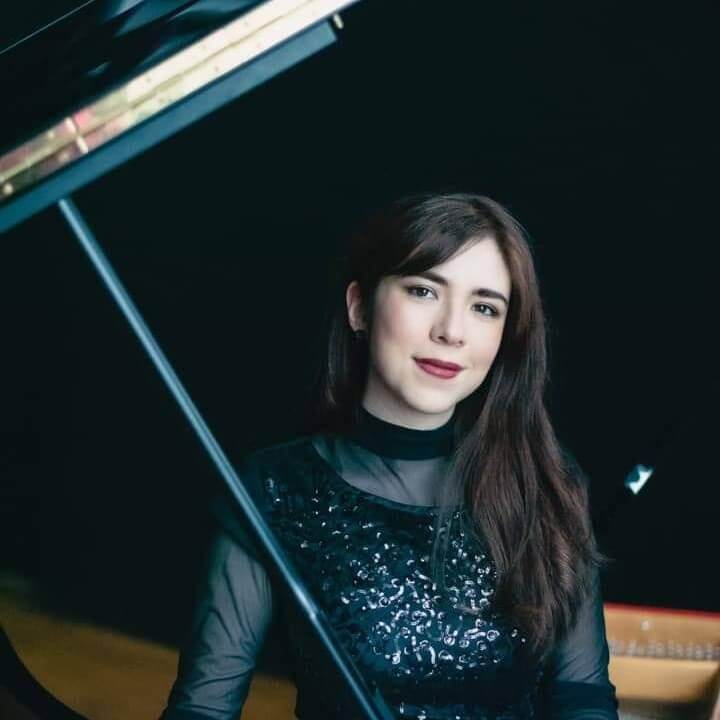
Julia Ageyeva Hess is an internationally recognized harpsichordist. She began her musical training as a pianist in her native Estonia. In 1998 she moved to the United States to continue her studies and developed a passion for harpsichord and historical performance. After receiving B.Mus. and M.Mus. degrees (both cum laude) from Arizona State University, Julia Ageyeva Hess moved to New York where she received a doctorate in harpsichord performance at SUNY Stony Brook in 2011. Julia’s teachers include Arthur Haas, Eckart Sellheim, John Metz and Kimberly Marshall and she has participated in master classes with Lars Ulrik Mortensen, Kenneth Weiss, Andrew Lawrence King, Patrick Ayrton and Ketil Haugsand.
Julia Ageyeva Hess has appeared in concerts in the USA, France, Germany, Latvia, Lithuania, Estonia, Finland, Sweden, Italy and Russia, and has performed at numerous festivals, including the Boston, Berkeley, Amherst and Connecticut Early Music Festivals. During 2001-2009, she was harpsichordist and founding member of the California-based early music group Galileo Project. In 2004-2005 Julia Ageyeva Hess was organist and music director in St. Paul’s Episcopal Church in Patchogue, NY; in 2008-2009 she served as pianist in St. Jerome’s Catholic Church in El Cerrito, CA. In Estonia, she collaborated with partners such as NYYD Ensemble, Tallinn Chamber Orchestra and Tallinn Baroque Orchestra, and formed a harpsichord duo with Prof. Imbi Tarum. Julia Ageyeva Hess performed as a soloist with Golden Age and Pratum Integrum Orchestras in Moscow.
She received prizes at the Paola Bernardi competition in Bologna in 2013 (including the Mariolina De Robertis prize for best performance of a contemporary piece), Second International Volkonsky Harpsichord Competition in Moscow in 2013 and Westfield International Harpsichord Competition in Washington in 2012, and she received a diploma as a finalist at the First International Volkonsky Harpsichord Competition.
In 2016 Julia moved to Freiburg, Germany where she lives with her theorbo player husband Gary Hess and their two daughters. Since 2017 she teaches harpsichord and piano at the Heidelberg Music School.
Kadriorg Palace is one the most well known and beautiful historic concert halls in Estonia offering memorable music experiences already for many decades. The tradition of performing music in the baroque palace goes back to 18th century when court music accompanied the daily life. The palace has had the pleasure to welcome many international artists and ensembles for outstanding performances.
The construction of the Kadriorg Palace was started by the Tsar Peter the Great of Russia in 1718. It was named Catharinenthal (in Estonian Kadriorg) in honour of his wife Catherine I. The palace was designed by the Italian architect Nicola Michetti and its abundantly decorated main hall is one of the most exquisite examples of baroque architecture both in Estonia and in northern Europe.
Kadriorg Palace has always been the crown jewel of Tallinn. The small festive tsars’ palace in the style of Roman Baroque, surrounded by a regular garden, with fountains, hedges and flowerbeds, planned after the model of Versailles.
The palace was a summer residence of Russian emperors untill 1917. In the 1920s, and again in 1946-1991 palace served as the main building of the Art Museum of Estonia. In the 1930s, it was the residence of the Head of State of the Estonian Republic. In 2000, it was opened as the Kadriorg Art Museum, which displays the largest collection of old Russian and Western European art in Estonia.
Music has been performed in the palace halls since the 18th century. In the past few decades, the most brilliant Estonian and international musicians have delighted listeners in the palace. Regular concerts started to take place in the Kadriorg Palace again in 2014, when the museum launched the Palace Music Concert Series. The extraordinary acoustics and the magnificent interior of the main hall make every concert a truly enjoyable artistic experience.
The artistic director of the Palace Music Concert Series is Aare Tammesalu.
In cooperation of the Art Museum of Estonia.
Tickets are on sale at the Kadriorg Art Museum and Piletikeskus outlets.
Supporters: Estonian Ministry of Culture, The Cultural Endowment of Estonia, Estonian Public Broadcasting, Tallinn Culture and Sports Department, UNESCO City of Music Tallinn, Kultuurikõla, Pointprint
Special thanks: Visit Estonia, Visit Tallinn, Õhtuleht
Concert tickets are not refundable, but if necessary, we can exchange them for passes to other Palace Music concerts
Event timeline/line-up