New Year's Eve Concert • Lossimuusika
Sunday, December 28, 2025 at 6 p.m.
Kadriorg Palace / Kadriorg Art Museum, Tallinn
PALACE MUSIC NEW YEAR`S EVE CONCERT
Daniil Bulayev - violin (Latvia)
Erika Jakobsone - piano (Latvia)
Rain Vilu - viola
Aare Tammesalu - cello
Mati Lukk - double bass
Program:
Franz Schubert (1797-1928)
String Trio in B-flat Major D. 471
Allegro
Piano Quintet in A Major D. 667, Op. 114 ("The Trout")
Allegro vivace
Andante
Scherzo: Presto
Andantino - Allegretto
Allegro giusto
The Austrian composer Franz Schubert was born on January 31, 1797, near Vienna in Himmelpfortgrund, and died on November 19, 1828, in Vienna. He combined elements of classical and romantic music styles in his works and was distinguished by his extraordinary gift for melody and his rich output of songs. His symphonic works, piano, and chamber music also hold an important place in music history.
Franz Schubert made several attempts to write string trios – a minimalist ensemble that is one of the most demanding and complex chamber music genres for composers. Therefore, he completed only one trio but left behind several substantial fragments. One of these is his Trio No. 1 in B-flat major, D.471, which exists only as a complete first movement. This light and airy, simultaneously powerful and cheerful musical gem is perfectly suited to introduce the last Castle Music concert of 2025.
Schubert’s Piano Quintet in A major, also known as the "Trout Quintet", is one of the best-known chamber music works of all time. It is highly esteemed by performers, radio stations, and audiences alike. The five-movement composition created by the 22-year-old composer contains several characteristic elements that ensure its lasting popularity. The main source of the quintet’s success, however, is its bubbling and relentless joy of life.
In the summer of 1819, Schubert spent time in Steyr, Austria, with the star baritone of his time, Johann Michael Vogl, who was a tireless promoter of Schubert’s works. Vogl’s circle often gathered for informal home performances, where Schubert’s songs and piano works gained great popularity. One of Vogl’s friends was a wealthy music lover and amateur cellist, Sylvester Paumgartner, in whose salon midday concerts were held, and who also gave Schubert the opportunity to use his music room. Paumgartner was enthusiastic about Schubert’s song "Die Forelle" ("The Trout"). Thus, he commissioned a new work from the composer, wishing to hear an unusual instrumentation of piano-violin-viola-cello-double bass, which Johann Nepomuk Hummel had used in his Quintet op. 87.
The "Trout Quintet" was probably completed in Vienna in the same autumn. The composer followed the usual four-movement form of the classical period but, responding to the commissioner’s wish, added variations on the solo song "The Trout" as the penultimate movement. The flowing triplet motif of the quintet’s first movement appears first in the piano part and then passes on to the other instruments. After the calm Andante, the Scherzo presents lively folk melodies and dance rhythms to the listeners. The theme of Paumgartner’s favorite song sounds at the beginning of the fourth movement in the violin part, and in the following variations, all five instruments take turns soloing with the melody. The quintet’s finale is brilliantly agile and virtuosic. Schubert far surpassed the original model set before him.
Probably no complete performance of the quintet took place during the composer’s lifetime. Although the piece was published in print for the first time a year after Schubert’s death, the original manuscript has not survived. The only primary sources miraculously found are a set of parts and a handwritten copy of the score by Schubert’s friend Albert Stadler.
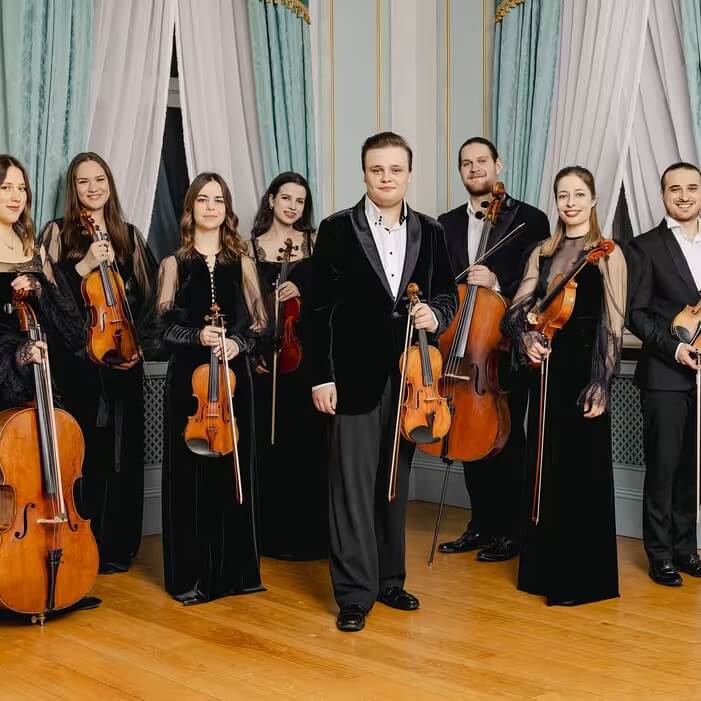
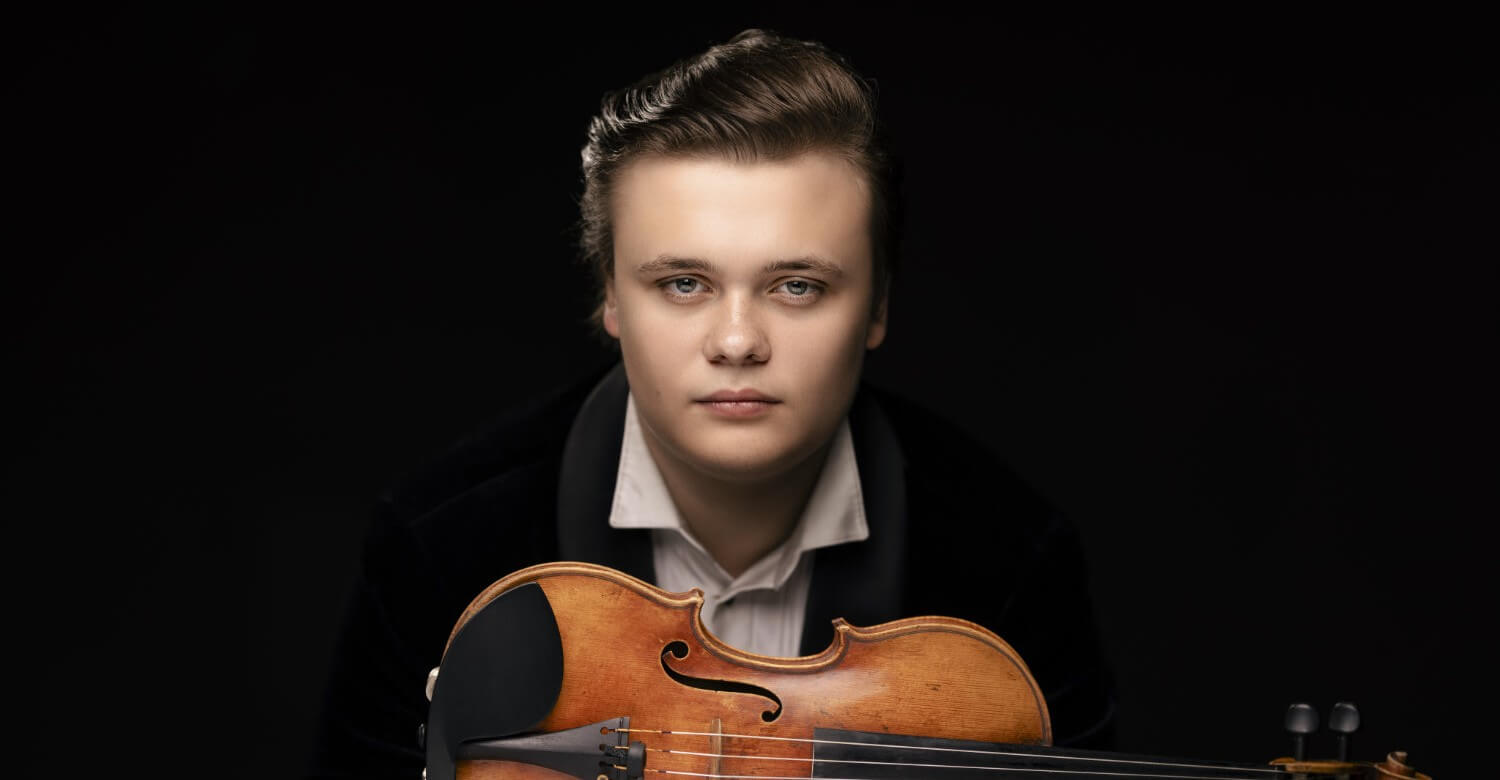
Daniil Bulayev – Latvian violinist, artistic director and founder of Davinspiro Camerata Chamber Orchestra. Daniil Bulayev was born on 16 of April 2004 in Riga (Latvia). Education: 2009 – 2014 Galina Turchaninova, 2011 – 2023 Nelly Sarkisyan (Emil Darzin Music College,Latvia), 2018 – 2023 Prof. Petru Munteanu (Leopold Mozart Centrum, Germany), 2023 – now Prof.Tereze Ziberte-Ijaba (Jazeps Vitols Latvian Music Academy, Latvia)
Daniil Bulayev currently performs on a violin from “Florian Leonhard Fine Violins” kindly loaned to him by Mr.Arkady Suharenko. His studies are supported by the Nākotnes Atbalsta Fonds (Rietumu Charity Fund).
Daniil performs as a soloist and as a chamber musician. In 2022 Daniil founded the Davinspiro Camerata Chamber Orchestra. He is currently the founder and artistic director of Davinspiro Camerata Chamber Orchestra.
Daniil made his debut as a soloist with the chamber orchestra in the Concert Hall Ave Sol in Riga (Latvia) at the age of 5. Two years later, when he was 7 y.o. he performed with the symphony orchestra.
At the age of 8 y.o. Daniil gave his first recital at the Central Music School (College) of the Moscow P.I.Tchaikovsky Conservatory Concert Hall.
In 2014 Riga (Latvia) was the European Capital of Culture (ECoC). On July 6, 2014 Daniil had the honor to perform as a soloist with the Kremerata Baltica Chamber Orchestra at the open-air gala concert “Born in Riga” at the Latvian National Opera which was broadcasted throughout Europe.
In 2015 was awarded the 3rd Premio Renzo Giubergia in Italy.
In 2018 Daniil had the honor to perform at the open-air gala concert “Born in Latvia”, Dzintari Concert Hall, dedicated to Latvia’s Centenary.
In 2019 was awarded the 7th Reinhold Würth Promotion Prize in Germany.
In 2019 violinist Vadim Gluzman granted Daniil a scholarship from the Arkady Fomin Foundation.
2020-2023 Daniil was Concertmaster of the Emil Darzin Music College Symphony Orchestra.
In 2023 Daniil made his recording at the Champs Hill Records (UK)
In 2024, Daniil made his conducting debut with the Astor Pjacolla's operita.
Daniil’s had the honor to perform at the concerts dedicated to the Independence Day of Latvia.
In October, 2022 Daniil performed at the concert dedicated to the centenary of the Latvia Saeima “Continuation. Our voices” at the Latvian National Theatre.
Daniil was invited to record some performances in professional studios Latvian Radio 3-Klasika, which was broadcasted.
In February, 2023 Daniil had the honor to perform Sibelius Violin Concerto with the Philharmonia Orchestra under the baton of the eminent Marin Alsop in the Waterloo Chamber of Windsor Castle.
As a soloist, Daniil has worked with conductors and musicians such as Marin Alsop, Kristiina Poska, Andris Poga, Gintaras Rinkevičius, Gidon Kremer, Francis Kan, Maxim Vengerov, Ivry Gitlis, Baiba Skride, Yuri Zhislin, Vladimir Spivakov, Normunds Šnē, Andres Mustonen, Ainars Rubikis, Julius Geniušas, Andris Vecumnieks, Andris Veismanis, Guntis Kuzma, Harutyun Arzumanyan, Eugene Sinaiski, Andrey Pushkarev, Agnese Egliņa, Guna Šnē, Ksenija Sidorova (accordionist), Irina Zahharenkova, Aare Tammesalu.
Daniil has performed with numerous orchestras, including the Philharmonia Orchestra, Latvian National Symphony Orchestra, Latvian National Opera Orchestra, Lithuanian National Symphony Orchestra, Macao Orchestra, Tatarstan State Symphony Orchestra, Armenian National Symphony and Chamber Orchestras Stuttgart Chamber Orchestra, Chamber Orchestra Glasperlenspiel Simfonietta, Chamber Orchestra Kremerata Baltica, Sinfonietta Riga Chamber orchestra, Salzburg Chamber Soloists, Moscow Virtuosi Chamber Orchestra, the Russian Virtuosi of Europe Chamber Orchestra, Archi De Sono orchestra da camera, La Mitteleuropa Orchestra, Kaunas City Symphony Orchestra, Liepāja Symphony Orchestra, and the others.
Daniil’s repertoire is wide and varied. It includes classical and romantic masterworks, together with music by twentieth & twenty-first centuries composers. Daniil performs music of the contemporary composers including Giya Kancheli, Arvo Part, Pēteris Vasks, Georgs Pelecis, Pēteris Plakidis, Sofia Gubaidulina, Paul Schoenfeld, Fazil Say, Ēriks Ešenvalds, Jēkabs Jančevskis.
Daniil’s music interests vary widely from performing of the great heritage of classical music to premiering works by contemporary composers and cross-genre performances.
Daniil continues to be committed to expanding community access to classical music and has shared music at charity concerts.
Daniil Bulayev is the Laureate of the International competitions:
IX International Balys Dvarionas competition for young pianists and violinists, 2012, Lithuania, Grand Prix
Ana Chumachenco Young Artist Award, Germany, 2017 (joint 1st prize)
Latvian National competition for Young Musicians in the Category “String Instruments”, 2014 (1st prize), 2018 (1st prize) and 2023 (1st prize)
I Zhuhai International Mozart Competition, China, 2015, 1st prize
Il Piccolo Violino Magico, Italy, 2017, 1st prize
Leonid Kogan International violin competition, Belgium, 2019, 1st prize
Kloster Schöntal 18th International Violin Competition, Germany, 2019, 1st prize, the 7th Reinhold Würth Promotion Prize and the kind loan from the Florian Leonhard Fine Violins of a fine Italian violin by Nicolò Gagliano made in Naples in the 18th century
Windsor Festival International String Competition, United Kingdom, 2021, 1st prize and Audience prize
IV Ilona Feher International Violin Competition, Hungary, 2022, 1st prize
Daniil has performed at various music festivals including:
XV International music festival „Musica Mundi”, Belgium
IV International music festival „New Names in Armenia”, Armenia
XI International music festival „Kremerata Baltica”, Latvia
XXIV International music festival, Lithuania
International music festival „Iguazu in Concert”, Argentina
International early music festival, Latvia, Rundale Castle
International music festival in Sion, Switzerland
Flourishing Arts, Macao
Shenzhen Futian International string festival, China
Christmas festival, Latvia
Altolivenzafestival Giovani, Italy
Risonanze, Italy
Jurmala Festival, Latvia
Christmas in the Palace of the Grand Dukes of Lithuania
International violin masterclasses in Kronberg Academy, Germany
International music festival Avanti
International music festival Artissimo
https://daniilbulayev.com/
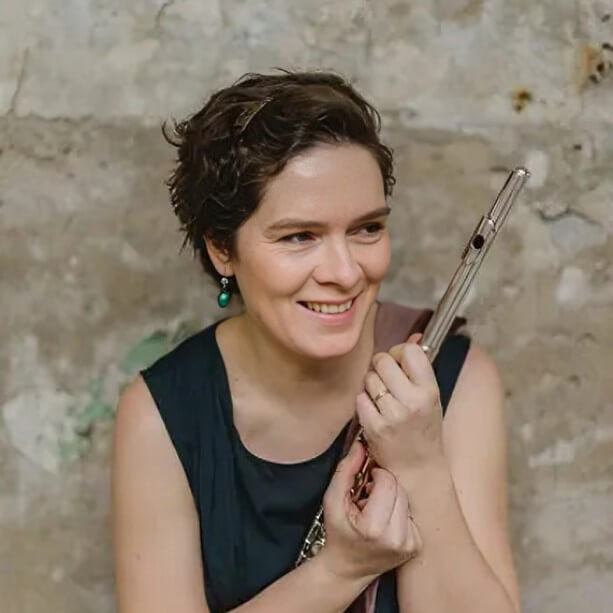
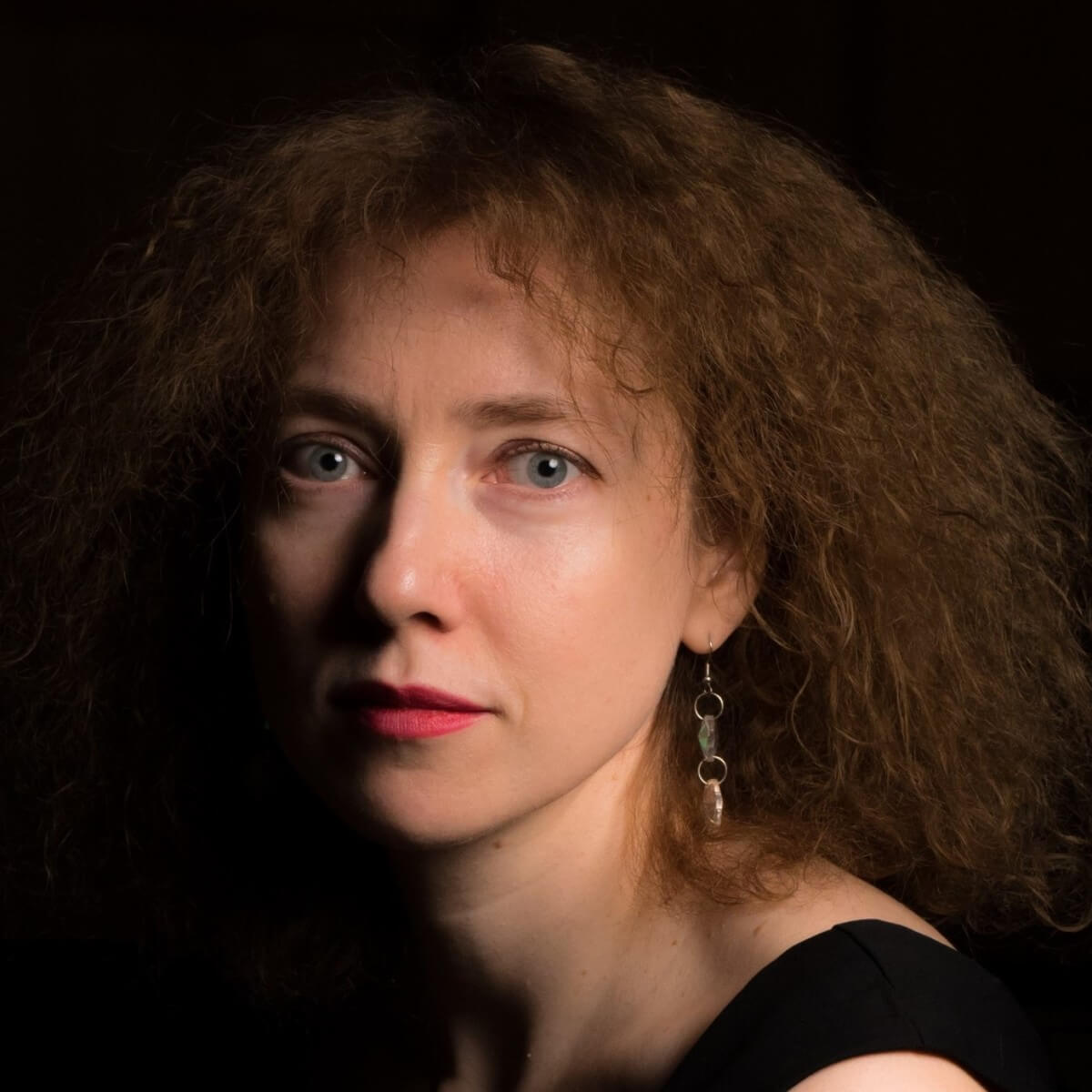
Erika Jakobsone is a Latvian pianist. She is a laureate of a number of international and national competitions in solo, chamber music and composition. Participated in the summer courses "Yaro Summer School" in Rostock with Stephan Imorde, in the Rīga Jūrmala Festival with Leif Ove Andsnes, in the international project of the Baltic States, Finland and Sweden "Crossing Keyboards" festival.
Erika has played with the Liepaja Symphony Orchestra and Jāzeps Vītols Music Academy Symphony Orchestra.
Her first piano teachers were Elga Klipa (Ogres Music school) and Lelde Paula (Emīls Dārziņš music school). Later, she became a student of Sergei Osokin at the Jāzeps Vītols Latvian Academy of Music.
She has attended masterclasses with such pianists as Naums Gruberts, Hamsa Al-Wadi Juris, Julia Mustonen-Dahlkvist, Diana Ketler, Evgeny Sinaiski and other.
In 2024 Erika took part in International Summer Academy for Young Artists in Bayerische Musikakademie Marktoberdorf with professor Willem Brons. Also after that, she was a participant in Willem Brons International Masterclasses in Amsterdam.
Currently, Erika is studying in the Folkwang Universität der Künste Duo Class with Evgeny Sinaiski. Also actively performs concerts both as a solo artist and as a chamber musician.
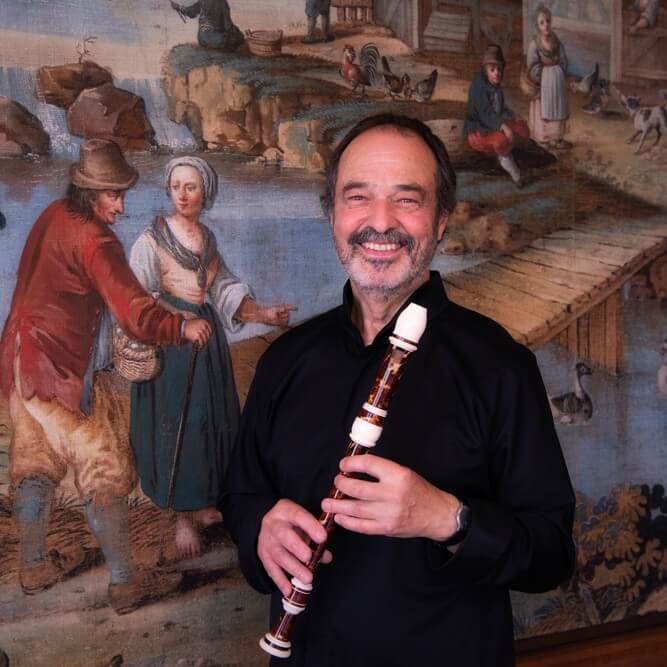
Rain Vilu has studied violin at the Tallinn Music High School and graduated from the Tallinn State Conservatory (current Estonian Academy of Music and Theatre) in the viola class of Professor Herbert Laan. He has been working at the Estonian National Symphony Orchestra since 1984 and he has been the principal viola of ENSO since 1992.
He was a member of the Tallinn Chamber Orchestra for more than ten years. However, due to his interest in Baroque music, he joined the Tallinn Baroque Orchestra, the Corelli Baroque Orchestra, and the ensemble Corelli Consort. He has also participated in the Collegium Europae programmes of the European Baroque Orchestra and toured with them under the guidance of Wieland Kuijken in the Netherlands, Belgium, Germany, and Poland. Rain Vilu is the founding member of the string quartets Noobel Nelik and Ardor.
He has been a lecturer at the Estonian Academy of Music and Theatre since 2002. Additionally, he has been managing the Symphony Orchestra of the Estonian Academy of Music and Theatre since 2005.
The cellist Aare Tammesalu performs classical and contemporary music. He acquired a Master´s degree at the Estonian Academy of Music and has enriched his university experiences by taking lessons from Prof. Mikhail Homitser in Moscow State Conservatory. He has performed in many European countries (Vale of Glamorgan Festival, Usedom Music Festival, Festival Sant Pere de Rodes, Emilia Romagna Festival etc), United States, Canada, Brazil, Japan, Iran and in prestigious concert halls in Russia (The Grand Hall of the Moscow Conservatory, St. Petersburg Philharmonia). In 2012, Aare Tammesalu was awarded the Hendrik Krumm Culture Prize, in 2019 the Annual Prize of the Estonian Music Council. He is artistic director of the Palace Music Concert Series in Tallinn and Mustjala Festival in Saaremaa Island (Estonia).
Mati Lukk has studied cello at the Tallinn Music High School with Laine Leichter and double bass with Kaupo Olt. After finishing the studies at the Tallinn Music High School, he continued at the Tallinn State Conservatoire, where he graduated from in 1984 with Kaupo Olt.
Mati Lukk has worked in 1980–1983 at the Estonian Radio Chamber Orchestra, in 1981–1990 at the Estonian National Symphony Orchestra (since 1985 ancillary concertmaster) and in 1991–1999, at the Turku Philharmonic Orchestra (ancillary concertmaster). Since 2000, Mati Lukk is concertmaster at the Estonian National Symphony Orchestra and since 2001, a pedagogue at the Estonian Academy of Music and Theatre.
Lukk has been a double bass player at several symphony orchestras such as the Nordic Symphony Orchestra, Malmö Symphony Orchestra, Hortus Musicus Academic Orchestra, Tallinn Chamber Orchestra and Pärnu City Orchestra. He has been a member of ensembles such as Tallinn Barocco (1987–1989) and Turku Ensemble (1966–1999). In 1999–2012, Mati Lukk was double bass player at Nyyd Ensemble. His partners at chamber concerts have been pianists Signe-Hiis Kübar, Nata-Ly Sakkos, Lea Leiten and Kairi Sakkos.
As a soloist, Mati Lukk has performed with the Estonian National Symphony Orchestra (Eduard Tubin’s and S. Koussevitzky’s Double Bass Concertos), Turku Philharmonic Orchestra (Eduard Tubin's Double Bass Concerto), Estonian Television and Radio Orchestra (D. Dragonetti’s Double Bass Concerto). In 2001–2003, Mati Lukk was one of the organizers of Hiiumaa Chamber Music Days and in 2004, the organizer of double bass music festival Ludvig Juht 110.
Mati Lukk has made several recordings for Estonian Public Broadcasting, he has played E. Tubin's and S. Koussevitzky's Double Bass Concertos with the Estonian National Symphony Orchestra, and various chamber works, as Erkki-Sven Tüür's Symbiosis, and also works for double bass quartet.
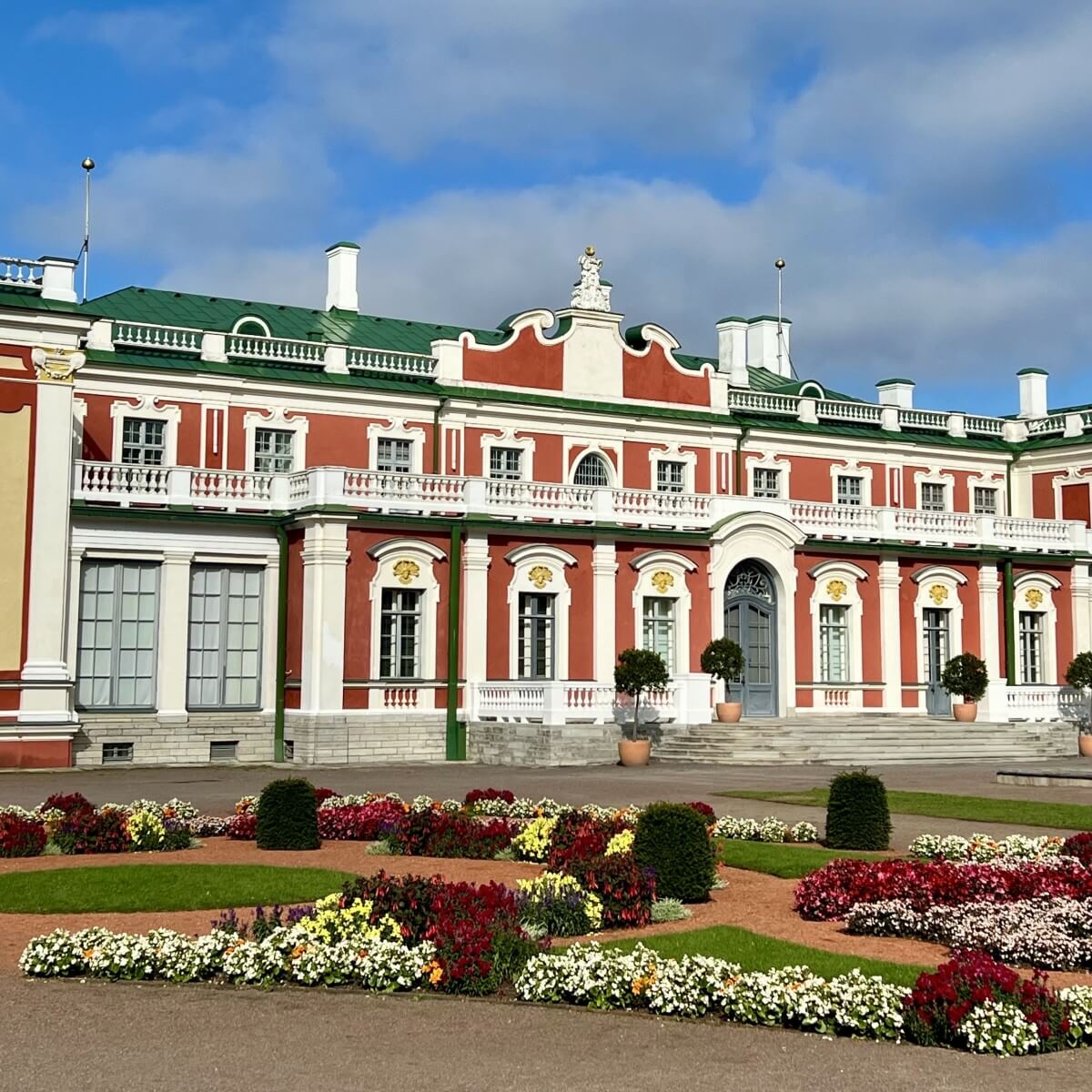
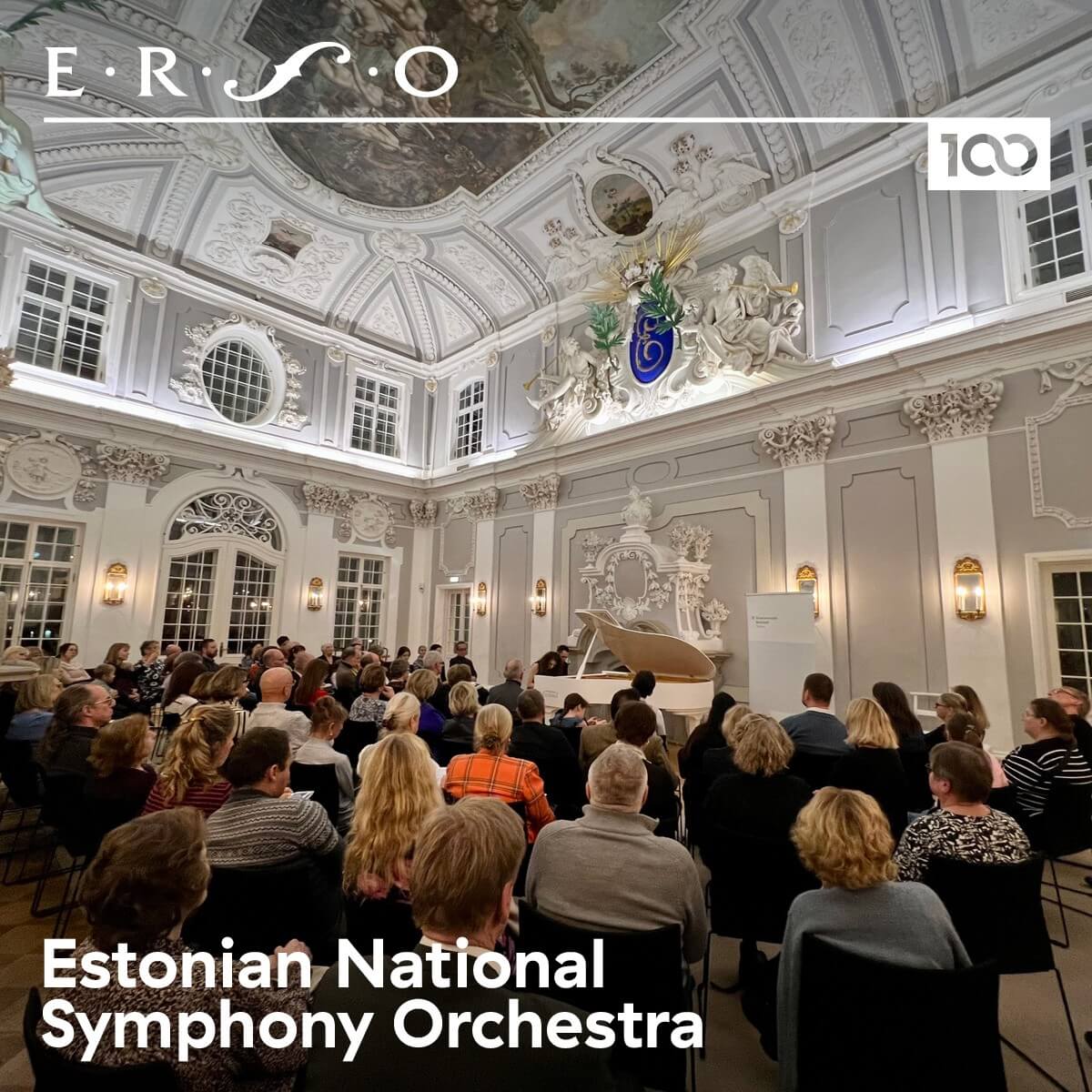
Kadriorg Palace is one the most well known and beautiful historic concert halls in Estonia offering memorable music experiences already for many decades. The tradition of performing music in the baroque palace goes back to 18th century when court music accompanied the daily life. The palace has had the pleasure to welcome many international artists and ensembles for outstanding performances.
The construction of the Kadriorg Palace was started by the Tsar Peter the Great of Russia in 1718. It was named Catharinenthal (in Estonian Kadriorg) in honour of his wife Catherine I. The palace was designed by the Italian architect Nicola Michetti and its abundantly decorated main hall is one of the most exquisite examples of baroque architecture both in Estonia and in northern Europe.
Kadriorg Palace has always been the crown jewel of Tallinn. The small festive tsars’ palace in the style of Roman Baroque, surrounded by a regular garden, with fountains, hedges and flowerbeds, planned after the model of Versailles.
The palace was a summer residence of Russian emperors untill 1917. In the 1920s, and again in 1946-1991 palace served as the main building of the Art Museum of Estonia. In the 1930s, it was the residence of the Head of State of the Estonian Republic. In 2000, it was opened as the Kadriorg Art Museum, which displays the largest collection of old Russian and Western European art in Estonia.
Music has been performed in the palace halls since the 18th century. In the past few decades, the most brilliant Estonian and international musicians have delighted listeners in the palace. Regular concerts started to take place in the Kadriorg Palace again in 2014, when the museum launched the Palace Music Concert Series. The extraordinary acoustics and the magnificent interior of the main hall make every concert a truly enjoyable artistic experience.
The artistic director of the Palace Music Concert Series is Aare Tammesalu.
In cooperation of the Art Museum of Estonia.
Tickets are on sale at the Kadriorg Art Museum and Piletikeskus outlets.
Supporters: Estonian Ministry of Culture, The Cultural Endowment of Estonia, Estonian Public Broadcasting, Tallinn Culture and Sports Department, UNESCO City of Music Tallinn, Kultuurikõla, Pointprint
Special thanks: Visit Estonia, Visit Tallinn, Õhtuleht
Concert tickets are not refundable, but if necessary, we can exchange them for passes to other events organized by NPO Loovüksus
Event timeline/line-up

Related