Triinu Piirsalu - Winner of the Estonian String Players Competition 2025 • Lossimuusika
Sunday, January 4, 2026 at 6 p.m.
Kadriorg Palace / Kadriorg Art Museum, Tallinn
Palace Music New Year Concert
Triinu Piirsalu - violin
Winner of the Estonian String Players Competition 2025
Benjamin Arnika Skydsgaard - piano
Program:
Nicola Matteis (ca 1650 - after 1713)
Aires for the violin
Prelude
Passaggio rotto
Andante veloce
Richard Strauss (1864–1949)
Violin Sonata in E-flat major, Op. 18
Allegro ma non troppo
Improvisation: Andante cantabile
Finale: Andante - Allegro
Béla Bartók (1881–1945)
Rhapsody No. 1 for violin and piano Sz. 86 (1928)
Prima parte ("lassú") - Moderato
Seconda parte ("friss") - Allegretto moderato
The Palace Music Concert Series gives the outstanding laureate of the Estonian String Players Competition 2025 a special prize, which is a solo concert in the hall of the Kadriorg Palace.
Competition information: https://eamt.ee/uritused/eesti-keelpillimangijate-konkurss-2025/
As a violin and piano duo, Triinu and Benjamin explore endless possibilities for music and self-expression together. They understand and interpret music just like the world around them—through curiosity, wonder, sincerity, and respect. Their desire is to reflect music to the listener as authentically as possible, as a unique experience, while deeply honoring the composer's vision.
Nicola Matteis (c. 1650 – after 1713), called the "second Corelli" and completely forgotten until the end of the 20th century, was the earliest noteworthy Italian baroque violinist in London. He became an important link in English music history, whose expressive and virtuosic playing astonished and inspired listeners, and who, according to contemporaries, "polished and refined the ears of the English people." Matteis enjoyed significant artistic and commercial success with his concert activities and compositions. Particularly popular were the 4 books of Ayres for the Violin, where he occasionally approaches the bohemian manner of his contemporary Heinrich Ignaz Franz von Biber, in other more conventional dance-like movements recalls his compatriot Arcangelo Corelli, but in most ayres hides a true spark of individuality. Knowing that many performers of his music were amateurs, Matteis provided precise and detailed instructions in the foreword to the part edition of his "Ayres" on bowings, ornaments, tempos, and other performance techniques. These notes have proven to be a valuable source today for both interpreters and musicologists reconstructing performance practices of the baroque period.
The Violin Sonata in E-flat major, Op. 18 was written by Richard Strauss in 1887 and published in 1888. Although not considered a milestone in violin literature, it is frequently performed and recorded. It is noted for its lyrical beauty and its technical demands made on both violinist and pianist.
Following the completion of his Cello Sonata and Piano Sonata, Strauss composed his Violin Sonata in 1887. It was during this time that Strauss fell in love with Pauline de Ahna, the soprano whom he would later wed, and his amorous feelings can be heard throughout the piece.
Like all of his chamber music, Strauss' sonata follows standard classical form, though it is considered the last of his works to do so. The piece is in three movements, and takes approximately thirty minutes to perform:
The first movement opens with a brief piano solo, followed by lyrical violin interludes, through which the thematic material is presented. This movement follows typical sonata-allegro form, and although it begins in a melancholy tone, the movement ends jubilantly.
The second movement is unique in that it is an Improvisation; that is, the tranquil violin passages give the impression of improvisational material. This movement maintains a beautiful singing tone throughout, and ends meditatively. It is in ternary form.
The third and final movement begins with a slow, meditative piano introduction which then leads into an exuberant Allegro. After a rush of virtuosic passages from both performers, the sonata comes to an explosive end.
The sound language of Hungarian composer Béla Bartók is an organic fusion of folk music sources and modernist compositional techniques. His great interest in folklore led him to collect folk songs not only in his homeland and Eastern Europe but also in Turkey and Algeria. Bartók is considered one of the founders of ethnomusicology, or the scientific study of folk music. As a composer, he sought to convey primal essence in music, emphasized by powerful and aggressive rhythms and the aesthetics of primitivism in its archaic sense. The First Rhapsody was composed for the outstanding Hungarian violinist Joseph Szigeti. This effective work consists of two gypsy dances: Lassú and Friss (slow and fast).
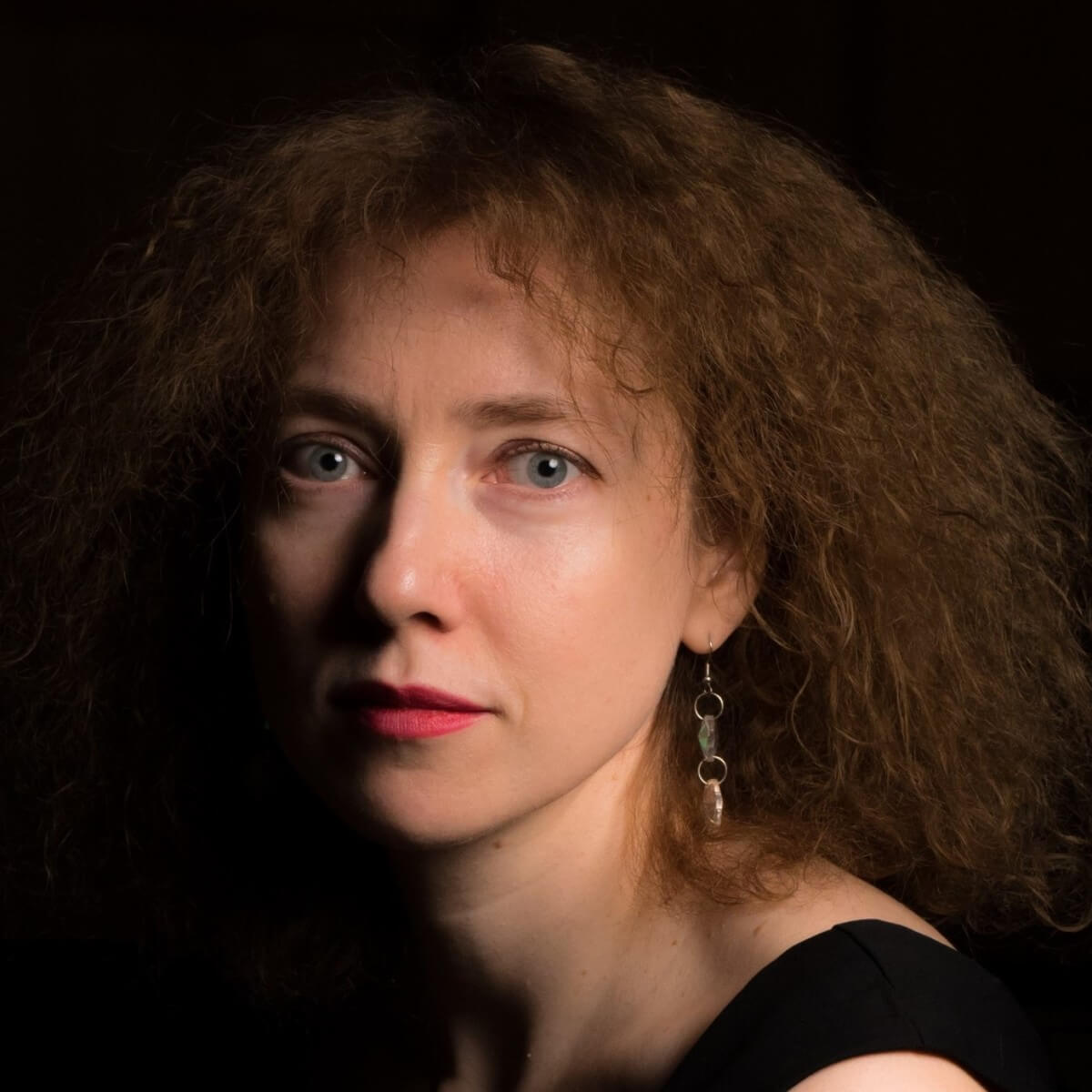
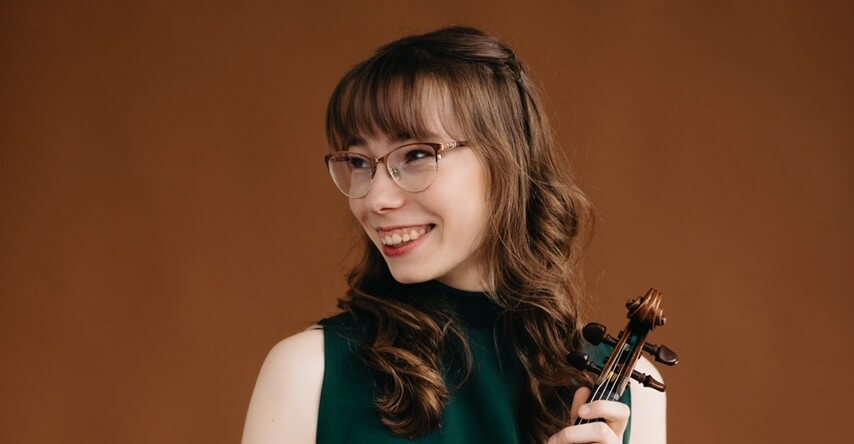
Triinu Piirsalu is one of the most outstanding Estonian violinists of her generation, having received widespread recognition both at home and abroad. She is a soloist with an emotional and compelling performance style and a passionate chamber musician. In autumn 2023, Triinu began her master’s studies at the University of Music and Performing Arts Munich in the violin class of Professor Mi-kyung Lee, while also pursuing a soloist diploma at the Royal Danish Academy of Music under the guidance of Professor Peter Herresthal.
Triinu has participated in numerous national and international competitions. In April 2023, she was selected, alongside four other outstanding young Norwegian musicians, by the Bergen Philharmonic Orchestra to perform as a soloist at their traditional concert De Unges Konsert. This opportunity was accompanied by the Grieg Foundation Award and a solo performance with the orchestra (Bartók’s Violin Concerto No. 2).
In November 2020, she was awarded third prize and a special prize from the Tallinn Chamber Orchestra at the Estonian String Players’ Competition. In autumn 2020, she achieved second place in the televised competition Klassikatähed and was also the audience favourite.
At the beginning of 2024, Triinu Piirsalu received the Young Musician Award from the Hansa Group Fund. She began her violin studies at Tallinn Music School under Katrin Talmar and continued at Tallinn Music High School under the guidance of Tiiu Peäske.
In 2019, she began her bachelor’s studies at the Sibelius Academy in the violin class of Professor Réka Szilvay. During her years in Helsinki, Triinu developed a growing interest in the folk music of different countries. During her exchange year in Norway (2022/2023), she also took up playing the Hardanger fiddle.
She has a strong artistic collaboration and friendship with Aavik Duo, with whom she has performed new works written specifically for their ensemble by Estonian composers such as Tõnu Kõrvits, Peeter Vähi, and Liis Jürgenson. Triinu plays in various chamber ensembles and is also a member of the Estonian Festival Orchestra.
She plays a violin made by M. Deconet in 1760.
With his poetic approach and deep passion for music, Benjamin Arnika Skydsgaard is more than just a pianist. Inspired by his mentor, the late French pianist and pedagogue Eugene Indjic, Skydsgaard has grown into a musical storyteller, exploring the piano’s infinite universe.
Benjamin grew up in Slagelse in a family where music was always present. His uncle was the opera singer Ulrik Heise, and his father played guitar to unwind after work. But it was the piano that truly captivated Benjamin.
He began lessons at the local music school, where his first teacher, Lillian, made learning fun.
He was later admitted to the talent program at Slagelse Music School, and after graduating from Sankt Annæ Gymnasium and spending a year at Ollerup Efterskole, he was accepted into the Royal Danish Academy of Music, where he continues to explore the meaning and potential of music.
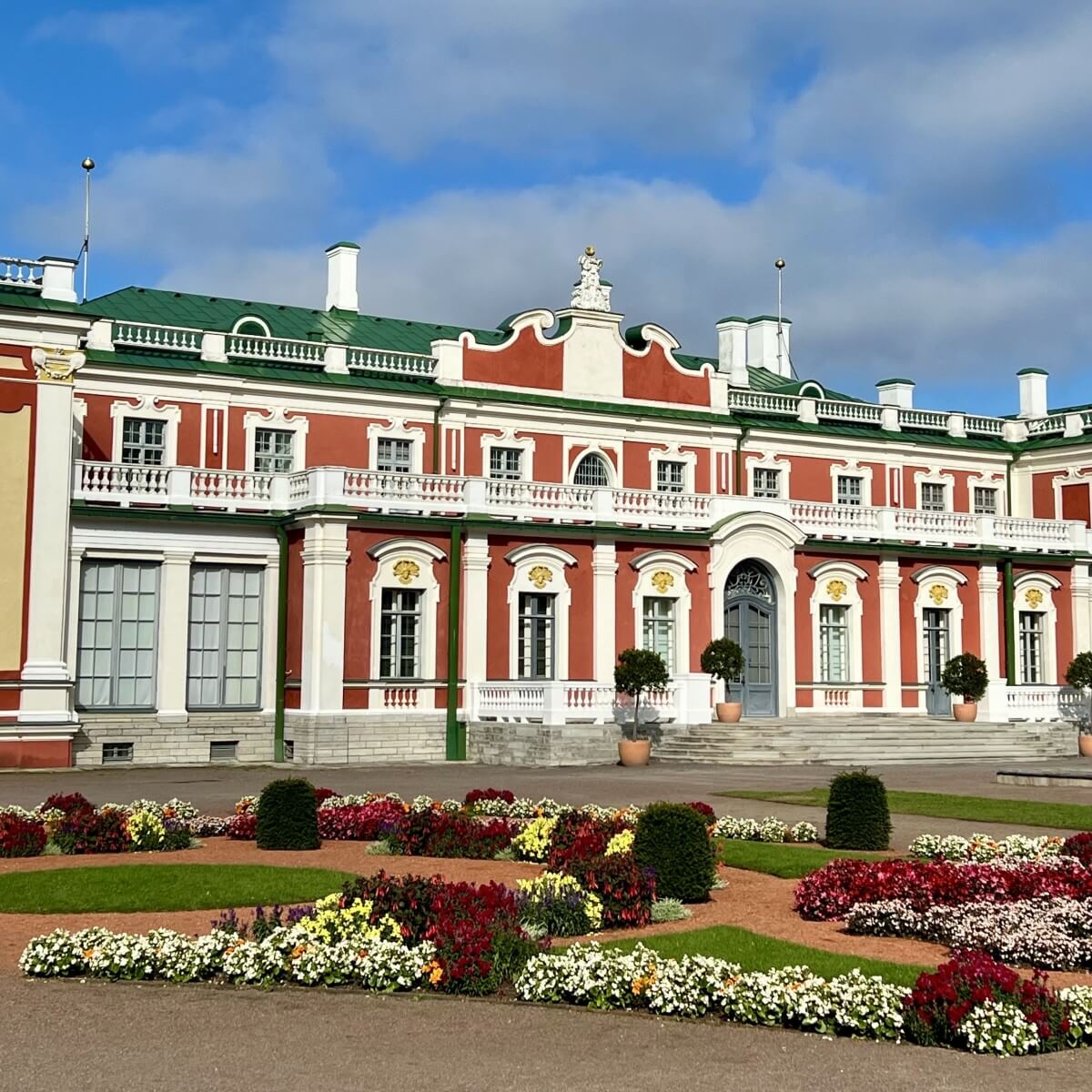
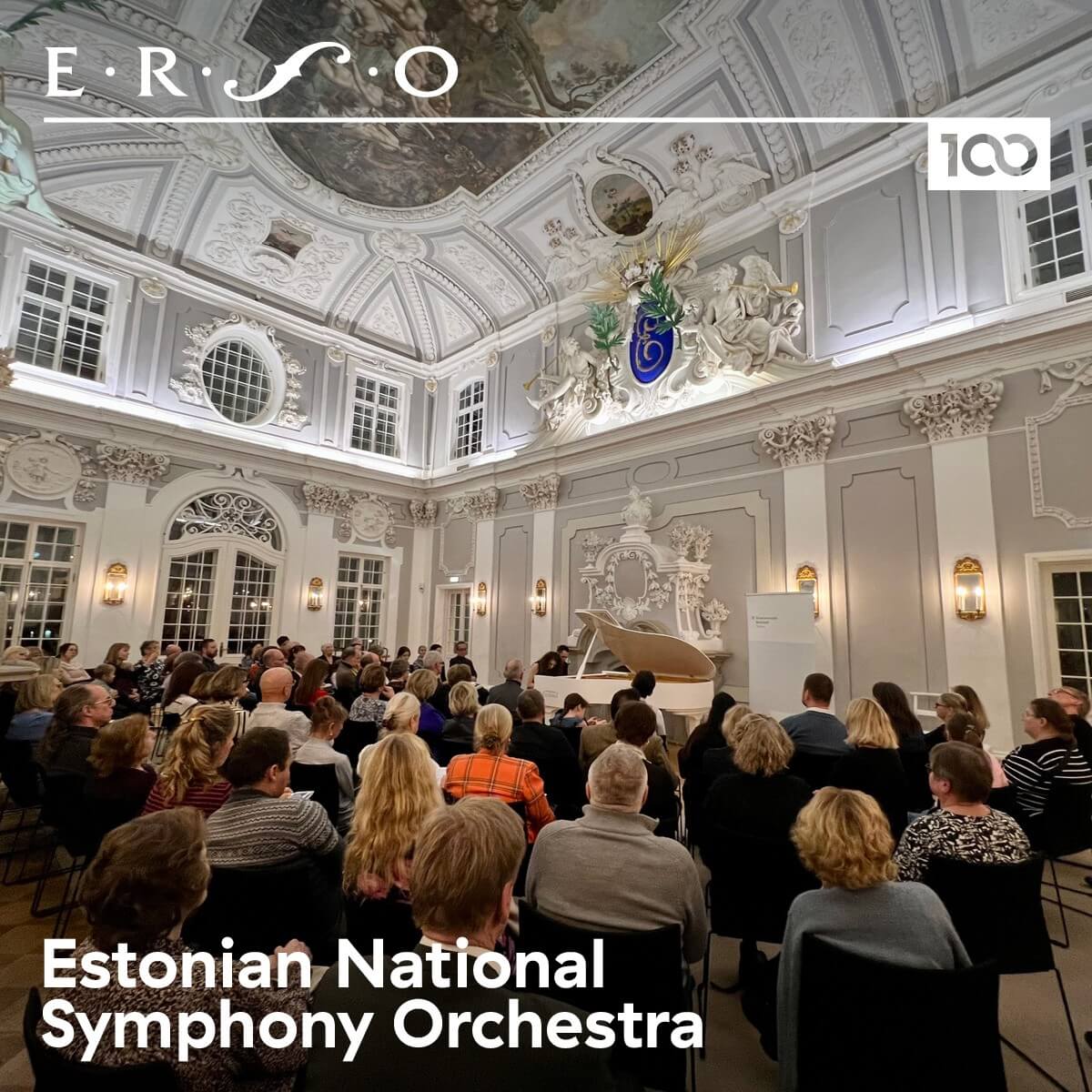
Kadriorg Palace is one the most well known and beautiful historic concert halls in Estonia offering memorable music experiences already for many decades. The tradition of performing music in the baroque palace goes back to 18th century when court music accompanied the daily life. The palace has had the pleasure to welcome many international artists and ensembles for outstanding performances.
The construction of the Kadriorg Palace was started by the Tsar Peter the Great of Russia in 1718. It was named Catharinenthal (in Estonian Kadriorg) in honour of his wife Catherine I. The palace was designed by the Italian architect Nicola Michetti and its abundantly decorated main hall is one of the most exquisite examples of baroque architecture both in Estonia and in northern Europe.
Kadriorg Palace has always been the crown jewel of Tallinn. The small festive tsars’ palace in the style of Roman Baroque, surrounded by a regular garden, with fountains, hedges and flowerbeds, planned after the model of Versailles.
The palace was a summer residence of Russian emperors untill 1917. In the 1920s, and again in 1946-1991 palace served as the main building of the Art Museum of Estonia. In the 1930s, it was the residence of the Head of State of the Estonian Republic. In 2000, it was opened as the Kadriorg Art Museum, which displays the largest collection of old Russian and Western European art in Estonia.
Music has been performed in the palace halls since the 18th century. In the past few decades, the most brilliant Estonian and international musicians have delighted listeners in the palace. Regular concerts started to take place in the Kadriorg Palace again in 2014, when the museum launched the Palace Music Concert Series. The extraordinary acoustics and the magnificent interior of the main hall make every concert a truly enjoyable artistic experience.
The artistic director of the Palace Music Concert Series is Aare Tammesalu.
In cooperation of the Art Museum of Estonia.
Tickets are on sale at the Kadriorg Art Museum and Piletikeskus outlets.
Supporters: Estonian Ministry of Culture, The Cultural Endowment of Estonia, Estonian Public Broadcasting, Tallinn Culture and Sports Department, UNESCO City of Music Tallinn, Kultuurikõla, Pointprint
Special thanks: Visit Estonia, Visit Tallinn, Õhtuleht
Concert tickets are not refundable, but if necessary, we can exchange them for passes to other Palace Music concerts
Event timeline/line-up

Related