Lossimuusika: Ineke Hellingman • Lossimuusika
Sunday, October 19, 2025 at 6 p.m.
Kadriorg Palace / Kadriorg Art Museum, Tallinn
PALACE MUSIC
Ineke Hellingman - piano (Netherlands)
Program:
2 Choral Preludes:
Ballade No. 4, Op. 52
Mazurka brillante (1889)
Legende No. 2 "St François de Paule marchant sur les flots" S.175/2
Suite for Piano (1926)
Forlane (Allegretto)
Rondeau (Allegro vivace)
In cooperation with Helstone Fund
Thank you for your kind support: Astrid Helstone and Diederik Burgersdijk
Johann Sebastian Bach (1685-1750) was a German composer and organist, the most outstanding member of the Bach musical family. During his lifetime and even until the late 18th century, Bach was known only in a relatively narrow circle. He became widely recognized as a composer only in the first half of the 19th century. Bach is one of the greatest masters of polyphony of all time; he loved the fugue form and elevated it to the highest level. His oeuvre combines profound emotionality with constructive thinking and bold imagination with strict rationality. Bach was not an innovator but rather a synthesizer of three centuries of musical traditions preceding him and a perfecter of the styles and forms therein. He composed in all the art music genres that existed in his time except for opera. Today, Bach is considered the greatest and most important composer in the entire history of Western music.
The Italian pianist and composer Ferruccio Busoni (1866–1924) arranged a large amount of Bach’s music in various genres for the piano over 30 years. His transcriptions, gathered into several collections, also include performance recommendations, exercises, musical analysis, and essays on the art of transcribing Bach’s organ music to piano.
Frédéric Chopin (1810-1849) was a Polish Romantic era composer and piano virtuoso who composed music mainly for his favorite instrument. He was regarded as a poetic genius without equal in his generation. Ballade No. 4 was completed in 1842 in Paris and published in 1843 with a dedication to Baroness Charlotte de Rothschild. It is considered one of the most significant works of 19th-century piano music. English pianist John Ogdon said: "It is the most sublime, intense, and powerful of all Chopin's compositions... It is incredible that in just twelve minutes, the piece captures the entire experience of life."
Johannes Helstone, born Nicodemus Johannes Helstone (1853-1927), was a Surinamese composer, pianist and writer. He is best known for his 1906 opera Het Pand der Goden.
Helstone was born on the Moravian mission Berg en Dal on 11 January 1853 to Proserpina Ulm and Doris Nicolaas Helstone. He was born enslaved and was granted freedom at age ten, when the Dutch abolished slavery. He was named Nicodemus Johannes Helstone, but used the name Johannes or Johannes Nicolaas. At the age of 14, he was sent to Paramaribo for a teaching degree. His musical talents were noted by Heinrich Williger, the head teacher, who arranged that he could continue his studies at the Royal Conservatory of Music of Leipzig. He followed piano theory and composition under Alfred Richter, the son of Ernst Richter. In 1894, Helstone graduated cum laude.
Helstone received several offers to work abroad, but decided to return to Suriname. Musically, he was active as a composer, pianist, and organist. Professionally, Helstone was a teacher, and a church organist.
In 1906, Helstone wrote the opera Het Pand der Goden. It premiere was on 10 May 1906 in Paramaribo. The opera received positive reviews in Suriname. He translated the opera to German, and toured Germany, France and Austria where the opera was well received. Helstone received several job offers which he declined.
Other musical works include psalms, a mazurka brillante (1889), a toccata, Prinses Juliana Mars (1903) in honour of the birth of Princess Juliana, Emancipatie Mars (1913) and many songs in Dutch and German.
In 1903, Helstone wrote a book about the grammar of Sranan Tongo, the English-based Creole spoken in Suriname. The book is slightly controversial, because Helstone encouraged the Creole population to learn Dutch. In 1924 and 1925, Helstone wrote a five parts series about proverbs in Sranan Tongo. The proverbs are translated in Dutch and German with the occasional equivalent proverb in English, French, or Latin.
In 1921, Helstone was co-founder of the Herrnhutter-Comité, an organisation for the interests of the Moravian Church congregation.
Helstone's great-grandniece Astrid Helstone set up the Helstone Fund together with her husband Diederik Burgersdijk under the auspices of the Foundation Concertgebouworkest, with the aim of facilitating performances and research into the work of Johannes Helstone, his students, and other composers from former Dutch colonial territories, Burgersdijk also published a biography on Helstone in 2024, titled "Een opera voor Suriname. Over Het pand der goden van J.N. Helstone".
The Deux Légendes (French for 'Two Legends') are a pair of pieces for solo piano, (S.175 in the catalogue compiled by Humphrey Searle) by Franz Liszt, written in 1863. In 1863 Liszt made an orchestration of both legendes, S. 113 a/1 and S. 113 a/2.
St. François de Paule marchant sur les flots, S.175/2 is based on a legend of St. Francis of Paola, according to which he was refused passage by a boatman while trying to cross the Strait of Messina to Sicily. He reportedly laid his cloak on the water, tied one end to his staff as a sail, and sailed across the strait with his companions following in the boat. The piece was inspired by a picture owned by Liszt of St. Francis of Paola (who was Liszt's name saint), drawn by Eduard von Steinle. Liszt described it in a letter of 31 May 1860 to Richard Wagner: "On his outspread cloak he strides firmly, steadfastly, over the tumultuous waves - his left hand holding burning coals, his right hand giving the sign of blessing, His gaze is directed upwards, where the word 'Charitas', surrounded by an aureole, lights his way!"
Leo Smit was a Dutch composer and pianist. He studied piano with Ulfert Schults and composition with Zweers and Dresden. After taking his piano diploma in 1922, in 1923 he was the first composition student to graduate cum laude at the Amsterdam Conservatory. There he taught music analysis and harmony (1924-1927). In 1927 he moved to Paris where he met Milhaud, who was a major influence. Searching for new music he was impressed by the première of Markevitch's Cantate (1930), and enjoyed the informal music-making as practised by Milhaud and Honegger with their pupils in the Café Camélion, where he got to know the music of Ferroud. His ballet music Shemselnihar, performed in Amsterdam in 1929 under the direction of Monteux, shows he also studied the Russian composers. Although his film music for Jonge harten was a success, he criticized the commercialism that rapidly started to infect the genre. In Brussels he finished his Concerto for piano and wind instruments and the Concertino for cello and orchestra before returning to Amsterdam in December 1937. Now he had developed a unique style combining a characteristic drive with moving lyricism as well as spirit and humour. Smit's view on neo-classicism is an emotional one. The Concerto for piano and wind instruments has a startling opening with jazz elements. The slow movement is a chorale with sardonic wrong notes in the style of Stravinsky. In an interview with Karel Mengelberg (1940), Smit said: One should stimulate one's production without forcing it. The brilliant Symphony in C for Classical orchestra that Karel Mengelberg directed in 1936 shows that Smit had been right to be patient with himself. Carefully studying the masterworks of modern composers such as Debussy and Ravel, Smit had gradually developed his craftsmanship to its peak. In his first orchestral work, Silhouetten (first performed by the Concertgebouw Orchestra in 1925), six miniatures inspired by drawings of Paul Süss end with a daring foxtrot that already testifies to great fantasy and a remarkable talent for orchestration. During the 1920s he composed for the harpist Rosa Spier theatre music and lyrical works for harp, strings and flute that show a great knowledge of harp technique. In 1933 Spier gave the première of Smit's Concertino for harp and orchestra under van Beinum's direction. In 1938-1939 he composed vocal works of which the song Kleine prelude van Ravel is most ambitious in its use of vocal technique. The Trio for clarinet, viola and piano (1938) is one of the highlights of Smit's chamber music.
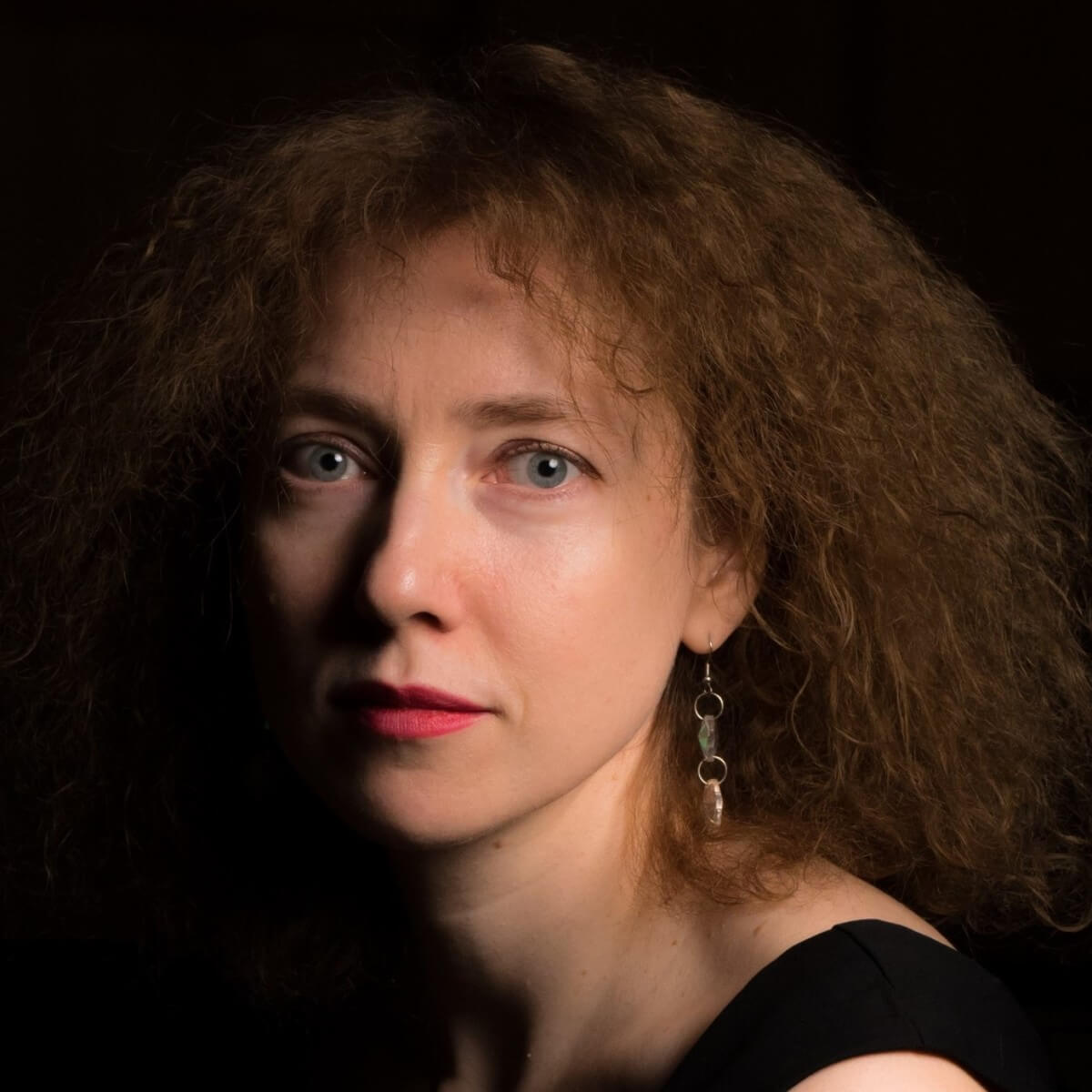
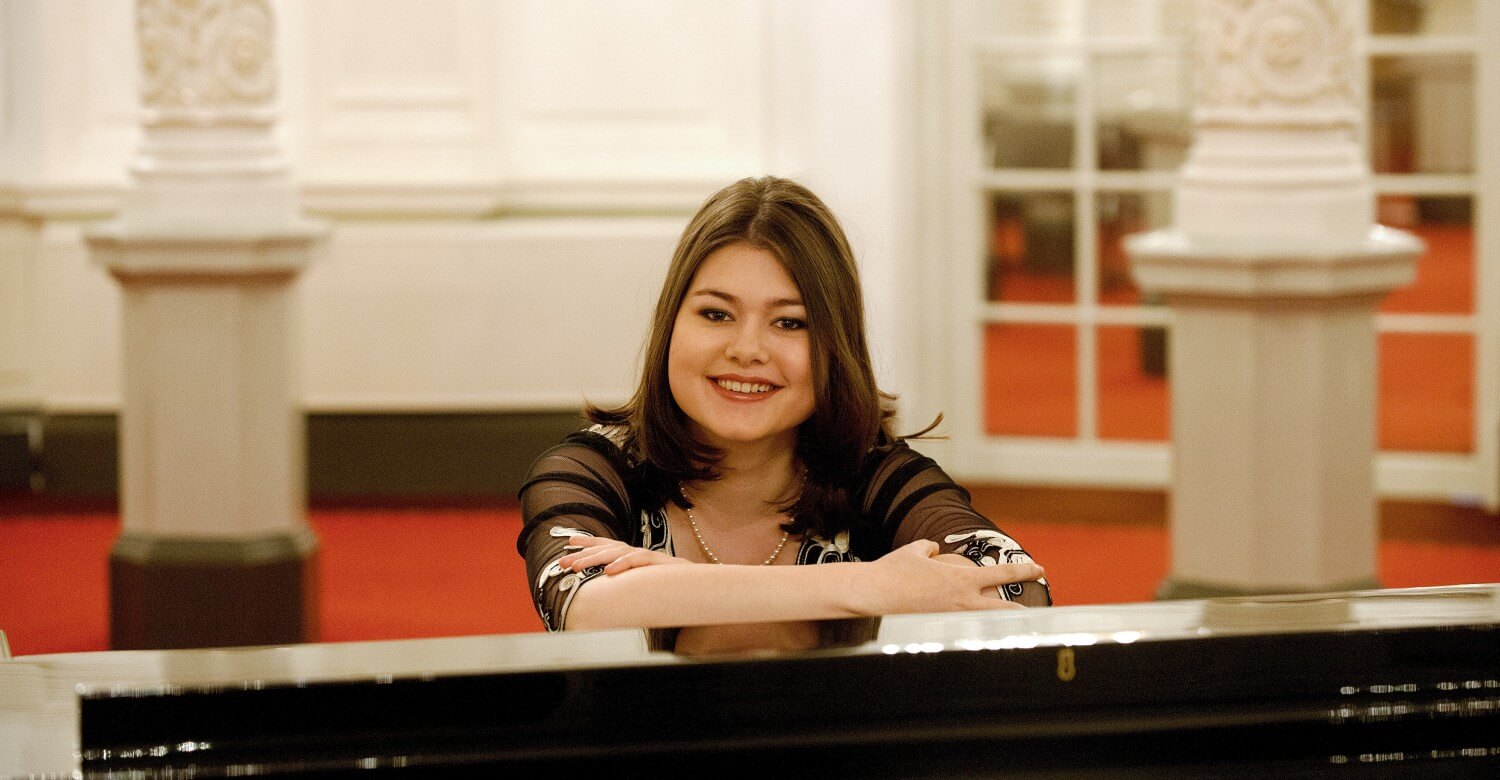
Amsterdam-born INEKE HELLINGMAN ranks among the most promising young pianists of Netherlands. She started playing at the age of six and made her orchestral debut at twelve. After completing the Preliminary Education and bachelor studies under the tutelage of Marjès Benoist at the Conservatory of Amsterdam, Ineke continued her studies with the renowned French pianist and conductor Jean-Bernard Pommier. Her final master recital was awarded with the highest possible distinction, an achievement for which she was honoured with the Hartman Award for Excellency.
Ineke took part in master classes with internationally acclaimed pianists such as Håkon Austbø, Tatiana Zelikman, Kathryn Stott, Valentina Lisitsa, Igor Roma and Yundi Li. She was also taught frequently by Ralph van Raat on contemporary music, she also studied historical instruments under Richard Egarr.
She was active on all major events in Holland, in the venues of Concertgebouw and Muziekgebouw in Amsterdam and De Doelen in Rotterdam. She also performs regularly abroad in Germany, Switzerland, France, Belgium, Austria and Hungary.
Apart from being a soloist, Ineke Hellingman is an active chamber musician in several ensembles. She took part in chamber music courses involving eminent musicians like Mikhail Voskresensky, Peter Brunt and Maarten Mostert. She played at the festivals Piano Prestige in France, Rovello Porro in Italy, Orlando Festival and the Beethoven Festival in Zutphen, Netherlands.
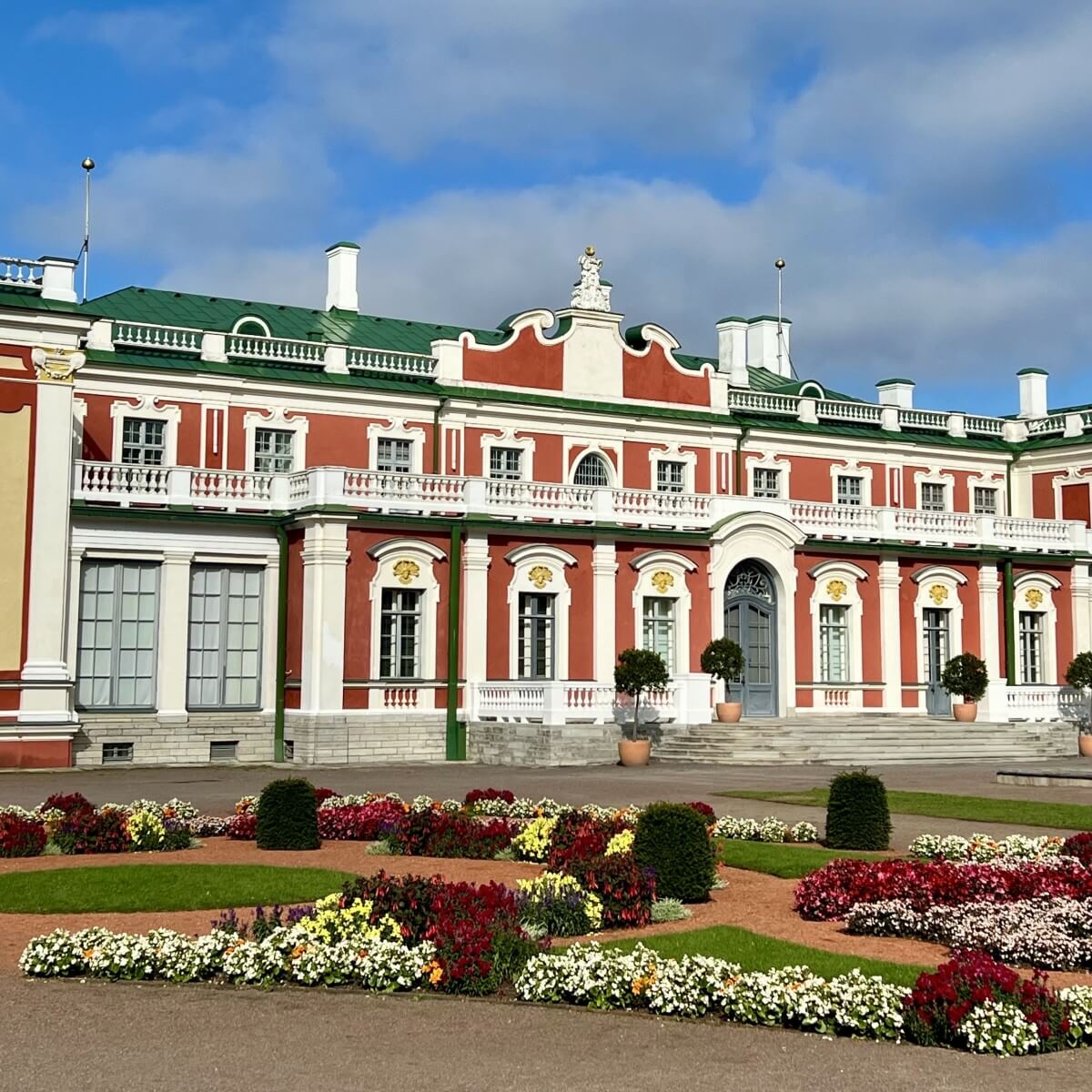
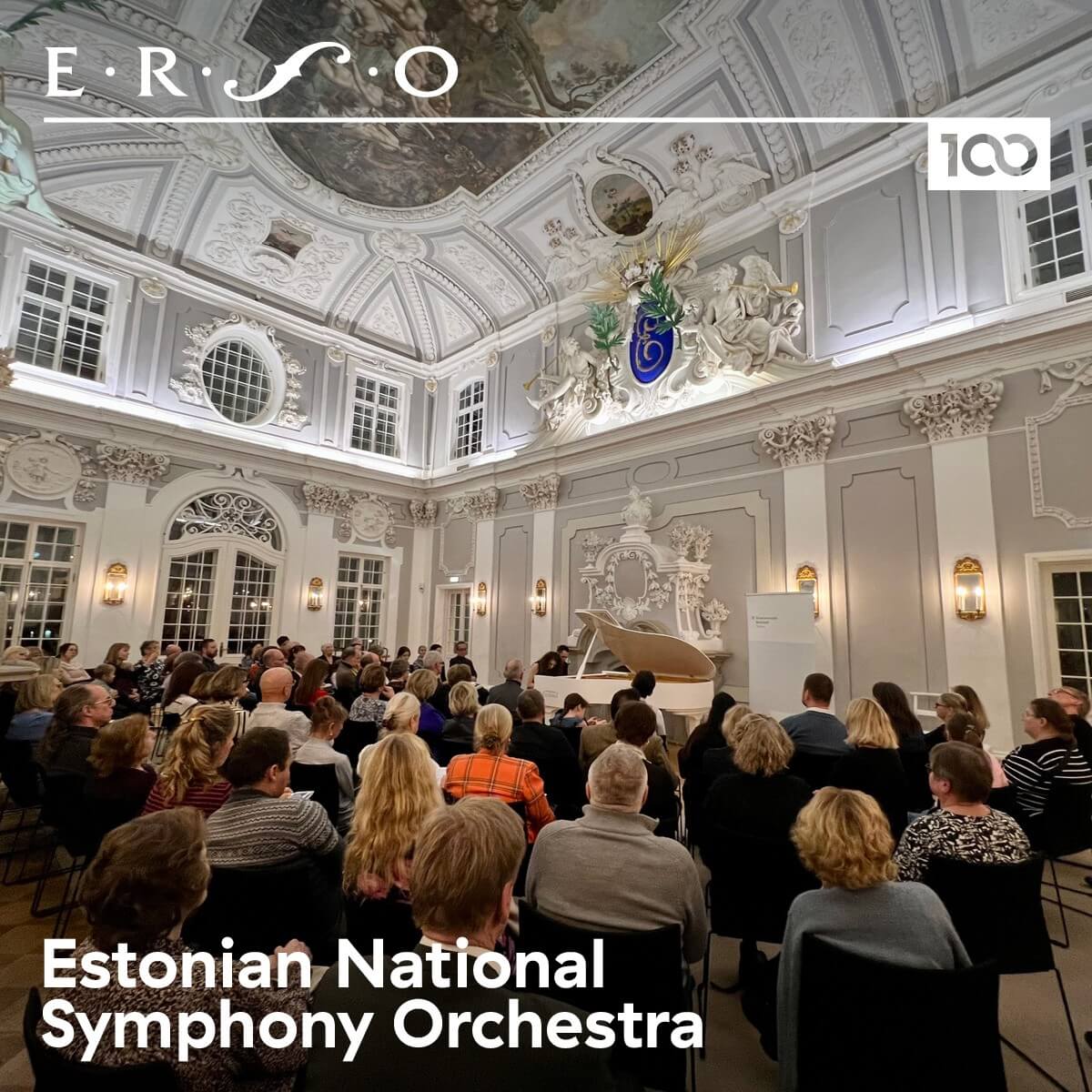
Kadriorg Palace is one the most well known and beautiful historic concert halls in Estonia offering memorable music experiences already for many decades. The tradition of performing music in the baroque palace goes back to 18th century when court music accompanied the daily life. The palace has had the pleasure to welcome many international artists and ensembles for outstanding performances.
The construction of the Kadriorg Palace was started by the Tsar Peter the Great of Russia in 1718. It was named Catharinenthal (in Estonian Kadriorg) in honour of his wife Catherine I. The palace was designed by the Italian architect Nicola Michetti and its abundantly decorated main hall is one of the most exquisite examples of baroque architecture both in Estonia and in northern Europe.
Kadriorg Palace has always been the crown jewel of Tallinn. The small festive tsars’ palace in the style of Roman Baroque, surrounded by a regular garden, with fountains, hedges and flowerbeds, planned after the model of Versailles.
The palace was a summer residence of Russian emperors untill 1917. In the 1920s, and again in 1946-1991 palace served as the main building of the Art Museum of Estonia. In the 1930s, it was the residence of the Head of State of the Estonian Republic. In 2000, it was opened as the Kadriorg Art Museum, which displays the largest collection of old Russian and Western European art in Estonia.
Music has been performed in the palace halls since the 18th century. In the past few decades, the most brilliant Estonian and international musicians have delighted listeners in the palace. Regular concerts started to take place in the Kadriorg Palace again in 2014, when the museum launched the Palace Music Concert Series. The extraordinary acoustics and the magnificent interior of the main hall make every concert a truly enjoyable artistic experience.
The artistic director of the Palace Music Concert Series is Aare Tammesalu.
In cooperation of the Art Museum of Estonia.
Tickets are on sale at the Kadriorg Art Museum and Piletikeskus outlets.
Supporters: Estonian Ministry of Culture, The Cultural Endowment of Estonia, Estonian Public Broadcasting, Tallinn Culture and Sports Department, UNESCO City of Music Tallinn, Kultuurikõla, Pointprint
Special thanks: Visit Estonia, Visit Tallinn, Õhtuleht
Event timeline/line-up

Related